
Warning: If you find nudity offensive, please skip reading this post. I enjoy annoying people from time to time, but I prefer doing it in person.
During my European travels, I realised that the female nudes weren’t accurate. All of them looked like Barbie, and the public area of every sculpture was smooth with no detail. At first, it wasn’t really noticeable, but it later grabbed my attention, given that every female nude either had its pubic area covered or was atomically incorrect. I will provide a brief history of the female nude. Then I will discuss several possible explanations for why the nudes are inaccurate. Some of these observations are my own; however, the main argument of this post is rooted in art history research.
Brief history
The first Greek nude sculpture can be found on the Ludovisi Throne Reliefs, and soon after, the first full-size female nude sculpture was sculpted. Aphrodite of Knidos, by Praxiteles, was seen as indecent at first given that it depicted a goddess as nude (Schriemer, n/d). It is intriguing that just goddesses were depicted as nude, never reputable women. The sculptures of these goddesses varied; sculptures echoed regional preferences and inspiration. The common trend was that godly and earthly men were depicted in the nude. Human women are noticeably missing from this type of sculpture. “Until Praxiteles sculpted his Aphrodite, it was expected that goddesses be portrayed clothed. Both Astarte [i] and Inanna-Ishtar [ii], however, were shown nude and signified fertility and power in their particular cultural contexts” (Schriemer, n.d.).
Context on Sparta
When I refer to Greece, I am specifically referring to Athens and other parts of the classical Grecian world but excluding Sparta. Sparta was a unique ancient Greek state where women played a different role in society compared to the rest of Greece. Spartan women were renowned for their natural beauty and were prohibited from using makeup or beauty enhancements. They received public education, which was uncommon for women in other Greek city-states. Although they could not pursue careers or earn a living wage through their education, they likely gained income from property ownership, which was either inherited or provided through land distribution programs. Unlike their counterparts elsewhere, Spartan girls were allowed to exercise outdoors as part of their education, competing in public sports events such as athletics, often naked. This was not practiced in the rest of Greece, where women were generally restricted from interacting with men outside their immediate family. Spartan women were also known for their confidence, outspokenness, and political knowledge, which set them apart from their peers in other Greek regions (Mark,2021).
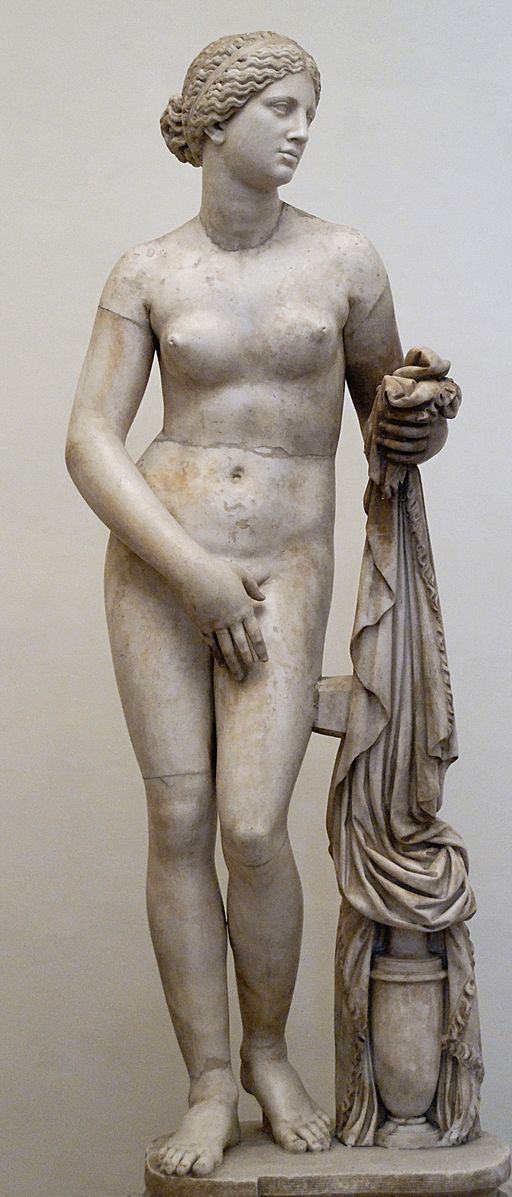
The first life-size female nude, by Praxiteles, made 375-335 BCE
Male sculptors
The first thing I thought about myself was that most of the sculptors were male, and maybe they weren’t comfortable creating a sculpture that was an exact replica of the nude female body. Fear of being dubbed a pervert may have prevented accurate female nudes. I did some Googling and found that the first female nude caused quite a stir in society. “The non-existent sculpting of the genital region may have been an attempt on the part of the sculptor to not cross the boundary of blasphemy by portraying a goddess in what would have been seen as a blatantly shameful fashion” (Schriemer, n.d.) Given that all the female nudes were of goddesses, retaining the dignity of the goddesses may have been why these nudes aren’t accurate. Greek and Roman society was also based on class, and remaining respectable sculptors may have feared becoming possible social outcasts for sculpting detailed female nudes. But this explanation is flimsy given that the breasts of the nudes are crafted in such detail, so chances are this isn’t the actual reason why the ladies look like the ancient version of Barbie. And also, why would an accurate, nude goddess be shameful when the male gods and mortals show off everything?
The position
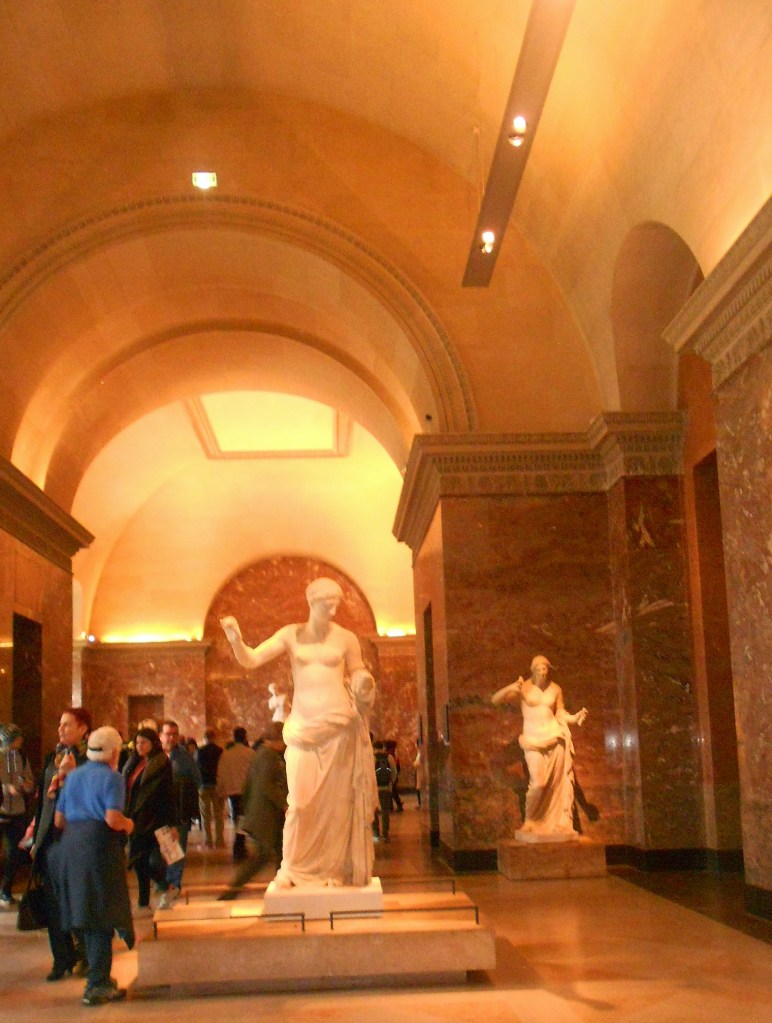
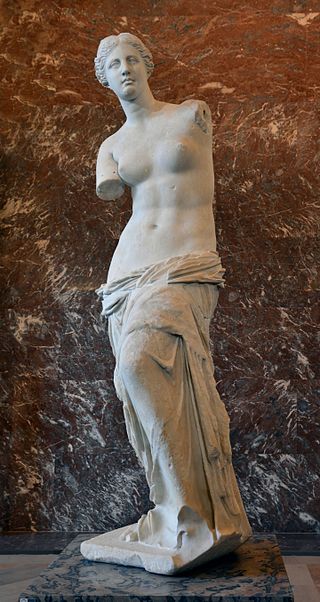
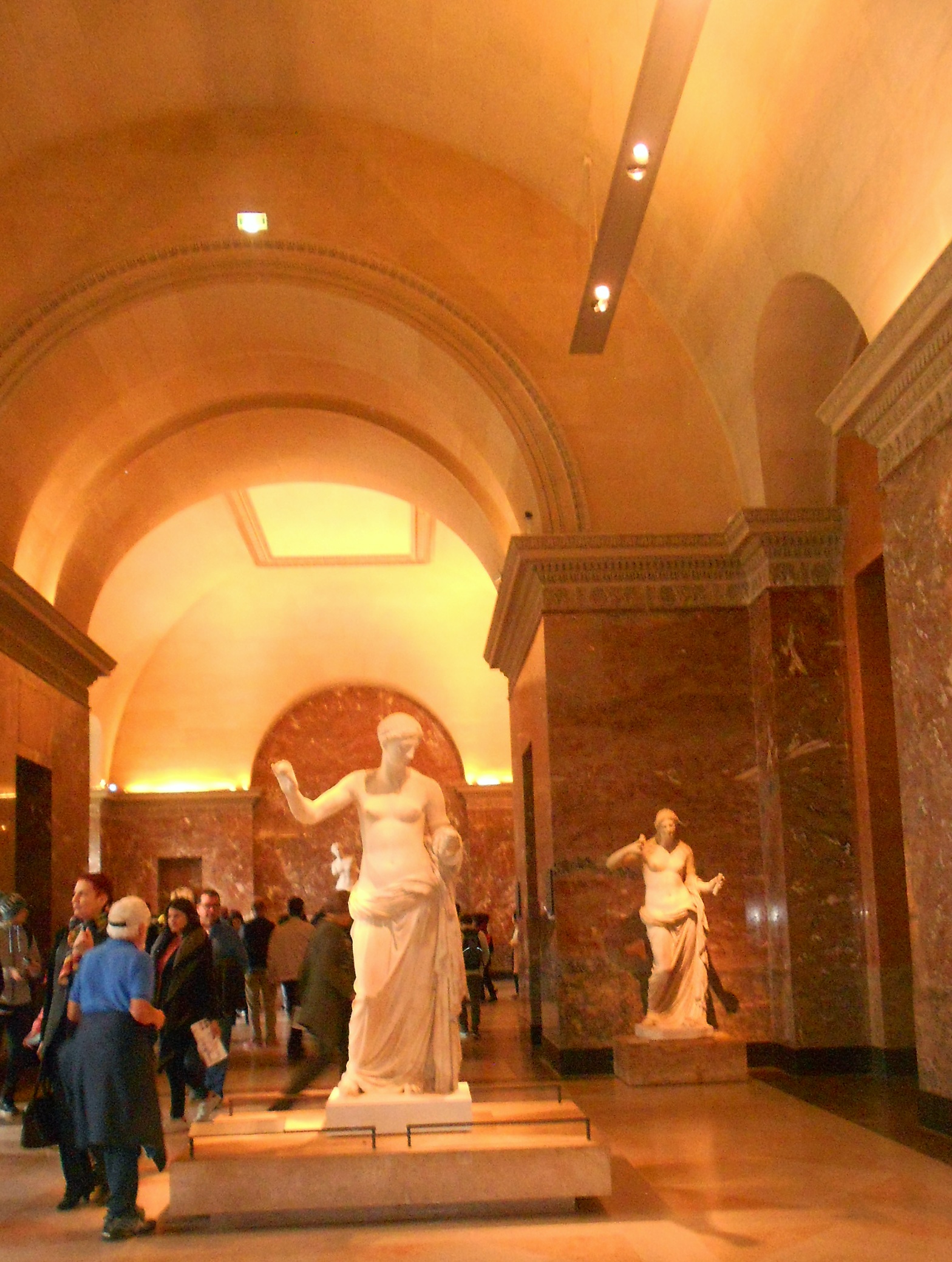
The next explanation, which I also came about by purely guessing, was that most of the female nudes are standing in an upright position with their legs closed. Displaying just a V shape is what the sculptor may have thought was accurate. The sculptures aren’t sitting down with their legs open. Female nudes are often standing in positions similar to male nudes. This may be why they all ended up looking like ancient Barbies instead of real women. This explanation is purely based on guesswork, and for me, it wasn’t enough of an answer. So I dug deeper.
The oppression of women
I will now explain how women were oppressed in ancient Greece (Cartwright, 2016).These conditions are most likely why the female nude was not sculpted in detail.
Patriarchy, erosion of Goddess culture, and shame
Then the last answer to my question was found by researching. In ancient times, goddess culture was a key part of society. People revered goddesses and built temples in their honour. Ancient culture changed though and became more patriarchal; this led to the erosion of female power and, in turn, goddess culture. The female nudes tend to be of goddesses displaying heroic nudity, and given that women had less influence, the depiction of the female form became intermingled with the politics of the time. A vagina, which included the vulva, was seen as something ordinary women had, not a goddess. Women’s genitals were also seen as unclean, burdensome, and a part of women, which all females should be ashamed of. “Somewhere along the line, the vulva became synonymous with the obscene. As ancient Greek society—Athenian society—developed, feminine power and, by extension, the vulva were denigrated. The surviving sculptures enforced Greek male ideals of the female body. (McFadden,2015). Hiding a woman’s true form may not have been about decency, but it was probably done to make females feel ashamed of their bodies for their femininity, which reduced their standing in society. Because if a goddess, who is the epitome of what people admire, was missing her private parts, then the idealised female form would exclude the reality of what ordinary women looked like.
Femicide
From birth, female babies were disadvantaged because of their gender. “As in many other male-dominated and agrarian cultures, female babies were at a much higher risk of being abandoned at birth by their parents than male offspring” (Cartwright, 2016) .Fathers could also choose whether their babies would be kept or abandoned. Mothers had no say as to whether their children would be kept or abandoned. This high incidence of infant femicide shows that males were seen as more valuable than females in ancient Greece.
Exclusion from politics and economics
Greek and Roman society was patriarchal, which meant that men held political and economic power. Women were excluded from voting and holding political positions (Cartwright, 2016). Slaves, women, and the indigent didn’t have the right to participate in the running of the ancient Greek state. Women, therefore, had no direct political power. They were essentially voiceless. Women with brothers normally gain no inheritance from their father. If the female, in this case, was an only child, her inheritance would be controlled by a male relative or her husband when she got married. She may have been forced to marry her closest male family member; in most cases, this was her uncle, in order to gain her inheritance. Females had some individual possessions, usually attained as gifts from relatives. Things such as clothes and jewellery were typical possessions of women. Females were not allowed to make a will, and when they died, all of their possessions would become their husband’s property (Cartwright, 2016).
Marriage and sexuality
Most females married at 13 or 14 years old, while men only married at 30. Women were expected to remain virgins until they married(Cartwright, 2016) The same standard was not required for men. Indeed, prostitution was widespread and legal for men to use as a sexual outlet (Cartwright, 2016) Women had to remain virgins and accept that men were not required to adhere to the same standard. Men were allowed to have mistresses, live as lovers, and be prostitutes (Cartwright, 2016) Women could not cheat or have children outside of their marriage. Women who were found cheating were charged with the crime of moicheia and were banned from communal religious ceremonies. Men could father children outside of their marriage. “Greek women were not expected to take any interest in sex, as this might lead to adultery and the horror of a potentially questionable bloodline. This restriction emphasised their primary role as child-bearers. In this role, they were expected to be chaste and modest” (Schriemer, n/d). Women who were married were completely dominated by their husbands; the law granted husbands total authority over their wives. Indeed, celebrated authors such as Aristotle believed that females lacked the intelligence and mental faculty required to make significant choices for themselves (Cartwright, 2016). There was also no place in society for unmarried women(Cartwright, 2016).
Less valued
In Greek society, female genitals were less valued. Hippocrates, who was a well-known doctor in ancient Greece and is also regarded as the father of modern medicine, came up with the theory that women were not fully formed. He came up with the Hippocratic oath, which is made by doctors. He is also regarded as the father of modern medicine, and his works influenced Aristotle (Kortsha, 2017). In his writing “On the Generation of Animals,” Aristotle explains that the female form is “a mutilated male” (Kortsha, 2017). He claims that a woman’s period is semen, but it is impure semen because it lacks “the principle of soul”(Kortsha, 2017). For him, because men impregnated women and their semen carried “the principle of soul,” women were seen as far less important in procreation. According to Aristotle, women have a cooler and moister disposition, which explains why the female body is mutilated. Women are deformed men who lack the heat needed to become fully developed people, to become men (Kortsha, 2017). The highly respected Greek doctor Galen, who lived in the 2nd century, believed that female genitals were flawed too. Only the penis was perfect. Galen and other Greeks believed that external genitals were the only true genitals (Saleh, 2011). For Galen and others, having a vagina wasn’t enough, as shown by this quote: “Aristotle and Galen both described the vagina as being devoid of a penis (Saleh, 2011).
Greek Mythology
It is clear that women had a very restricted role in the social order, yet shockingly, there are powerful women featured in Greek religion and mythology. Athena was the goddess of wisdom; she was seen as strong, clever, brave, and principled. Ancient Greek culture also revered goddesses that were linked to agriculture, given that agriculture was crucial to society at the time. Fertility goddesses were therefore honoured and well regarded, such as Demeter and Persephone, which were the most sacrosanct in ancient Greece. The Muses are seen as positive and are expert artists. The idyllic virtuous woman is embodied by the pure and loyal Penelope, which features in Homer’s Odyssey; she remains faithful to her absent husband despite the temptation she endures (Cartwright, 2016)
The Parthenon: The iconic Acropolis temple in Athens, designed by Iktinos and Kallikratis, dedicated to the goddess Athena, protector of the city

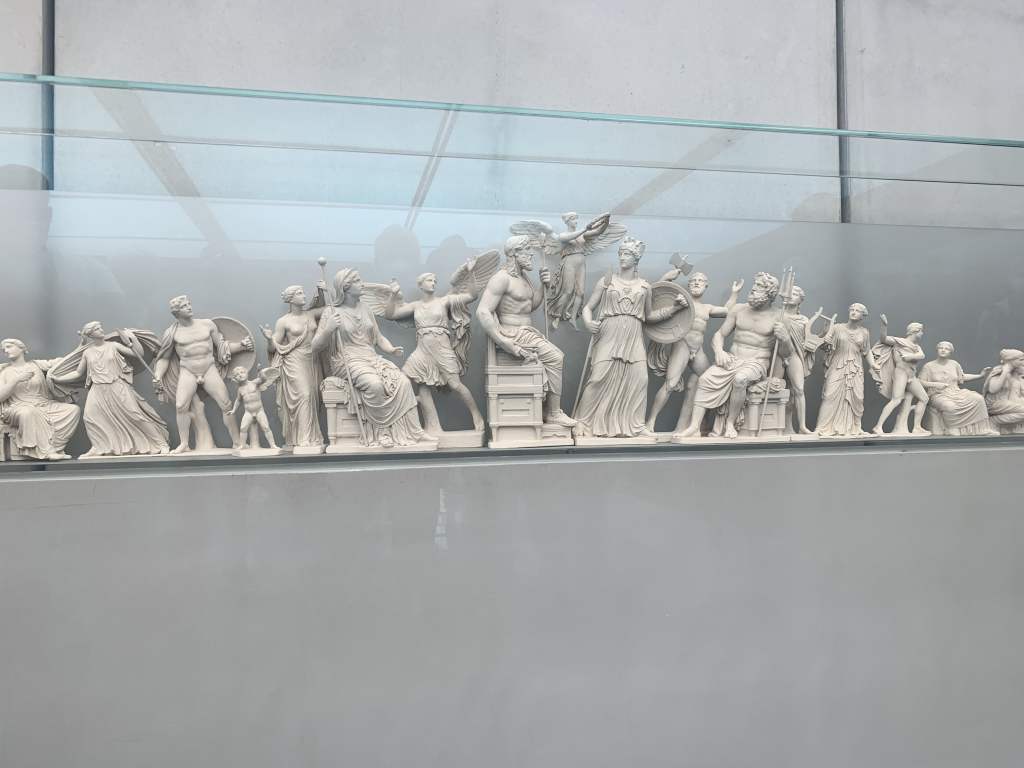
Detail from the Parthenon’s west façade: The epic contest between Athena and Poseidon for control of Athens, showcasing the goddess’s triumphant victory in this legendary local myth.
Yet ancient Greece also has a number of female characters who are rabble-rousers. Hera, the wife of Zeus, is jealous. Hera and Aphrodite use their feminine charms to make men lose their common sense. Then there are women in mythology who seek to ruin the missions of male heroes. The great witch Medea and the beautiful killer Sirens are examples of troublemakers in mythology (Cartwright, 2016). “Just as whites in apartheid South Africa were obsessed with racial classification and separation, the ancient Greeks and Romans spent a lot of time thinking about gender roles—and worrying about what would happen if women were to gain power. The more you oppress, the more you’re preoccupied by those you oppress…”(Tuttle,2017). Even Greek mythology perpetuates unequal gender relations. Zeus was a serial rapist (Tuttle, 2017). Zeus raped three women, Leda and Danae, who were princesses, and Thestius. He also raped Ganymede, a male mortal. It’s obvious that Greek mythology has already set the bar for misogyny and toxic masculinity (Tuttle, 2017). So although powerful goddesses were venerated, there were also negative female characters and deities, which most likely helped maintain the misogyny and patriarchy of ancient Greece.
In conclusion, Praxiteles was the first sculptor to create a full-scale female nude. Goddesses were depicted as nude, yet human women were never portrayed as nude by the Ancient Greeks and Romans. Male sculptors may have been embarrassed or fearful of accurately sculpting the genitals of goddesses. The position of the sculptures also tends to hide the details of the pubic area of the nude female sculptures. But chances are that the inaccuracy of the nudes is linked to misogyny and patriarchy, which existed in ancient Grecian society. Patriarchy increased, eroding Goddess culture; women were oppressed, and their genitals were seen as less than when compared to male genitals. This remains paradoxical given that Greek mythology was sometimes favourable towards women. There were goddesses and other deities who were revered, yet the human female body was not revered in the same way the male form was. At least now I know why the female nudes were missing labia, pubic hair, and other details.
Sources Used:
- Cartwright, M. (2016). Women in Ancient Greece
- Mark,J.J(2021). Spartan Women.
- Unknown Author. (2012). The Women of Sparta: Athletic, Educated, and Outspoken Radicals.
- Kortsha, M. (2017). Calling Women ‘Non-Men’ Isn’t Inclusive, It’s Sexism Straight from Ancient History.
- McFadden, S. (2015). The Lack of Female Genitals on Statues Seems Thoughtless Until You See It Repeated.
- Saleh, N. (2011). Female Misrepresentations.
- Schriemer, L. (n.d.). Undressing the Female Nude: The Paradox of Morality in Ancient Greek Sculpture.
- Tuttle, K. (2017). Tracing the Roots of Misogyny to Ancient Greece and Rome with Mary Beard.
Read More:
Thanks a million for reading my blog. I hope you enjoyed reading this post; it was written using a more academic essay style. Please feel


 Nikkidiscovers