
Vienna, a city steeped in history, has been a political juggernaut through periods of great development and decline. My one-day visit allowed me to explore the baroque-styled buildings and castles that house exquisite artworks, both graphic and musical. The Viennese passion for coffee is evident from the coffee cafes lining the cobblestoned streets. If you’re planning a brief visit to this magnificent city, this guide will help you make the most of your one day in Vienna.
Vienna’s History
Vienna’s rich history dates back to its Celtic settlement roots around 500 BC. By the first century AD, the city had become a Roman frontier known as Vindobona, with Roman remnants still visible in Vienna’s architectural landscape today. During the Middle Ages, Vienna emerged as a significant trading hub on the amber and salt routes.
The Habsburg Dynasty ushered in cultural and economic progress, with Maria Theresa’s reign marking a period of prominence and allure for Vienna. In the 19th century, Vienna became the capital of the Austro-Hungarian Empire, a leading city in economic, cultural, and political affairs. The golden age of classical music and flourishing arts defined this era.
Vienna’s expansion continued with industrialization and immigration, making it the 6th largest city in the world by 1910. However, the collapse of the Austro-Hungarian Empire after World War I led to rapid socialist spread. In 1938, Hitler’s declaration from the Hofburg balcony marked Austria’s annexation by Germany, leading to significant suffering for Vienna’s Jewish population during the Holocaust.
The city faced mass destruction during the Soviet advance from 1944-1945. Vienna’s city center, a UNESCO World Heritage Site, was rebuilt between the 1960s and 1970s. Post-war Vienna, divided among the US, UK, France, and the Soviet Union, experienced a unique governance structure with power rotating monthly. Vienna regained its independence in 1955 and saw a political revival in the 1970s with international organizations like OPEC and various UN agencies establishing their operations there.
Walking through Vienna, you’ll encounter images of Klimt’s paintings, Mozart, and Maria Theresa. While Vienna acknowledges its past, including the less savoury aspects such as Hitler’s Austrian origins, it focuses on its rich cultural legacy. Today, the city is renowned for its museums, art, monuments, coffee cafés, and concert halls.
The park (Burggarten)
My next stop was Burggarten, a scenic park with lush, manicured lawns. The park features a charming statue of Mozart, and since I arrived early, I enjoyed a peaceful stroll in an almost empty garden. The treble clef in front of Mozart’s statue seemed particularly unique. Created in 1818 for the emperor, the park opened to the public after the fall of the Habsburg Empire.
Burggarten also houses the Palmenhaus, a glass palm house where you can see butterflies and bats—a truly intriguing combination!
Address: Josefsplatz 1, 1010 Wien, Austria
St. Stephen’s Cathedral
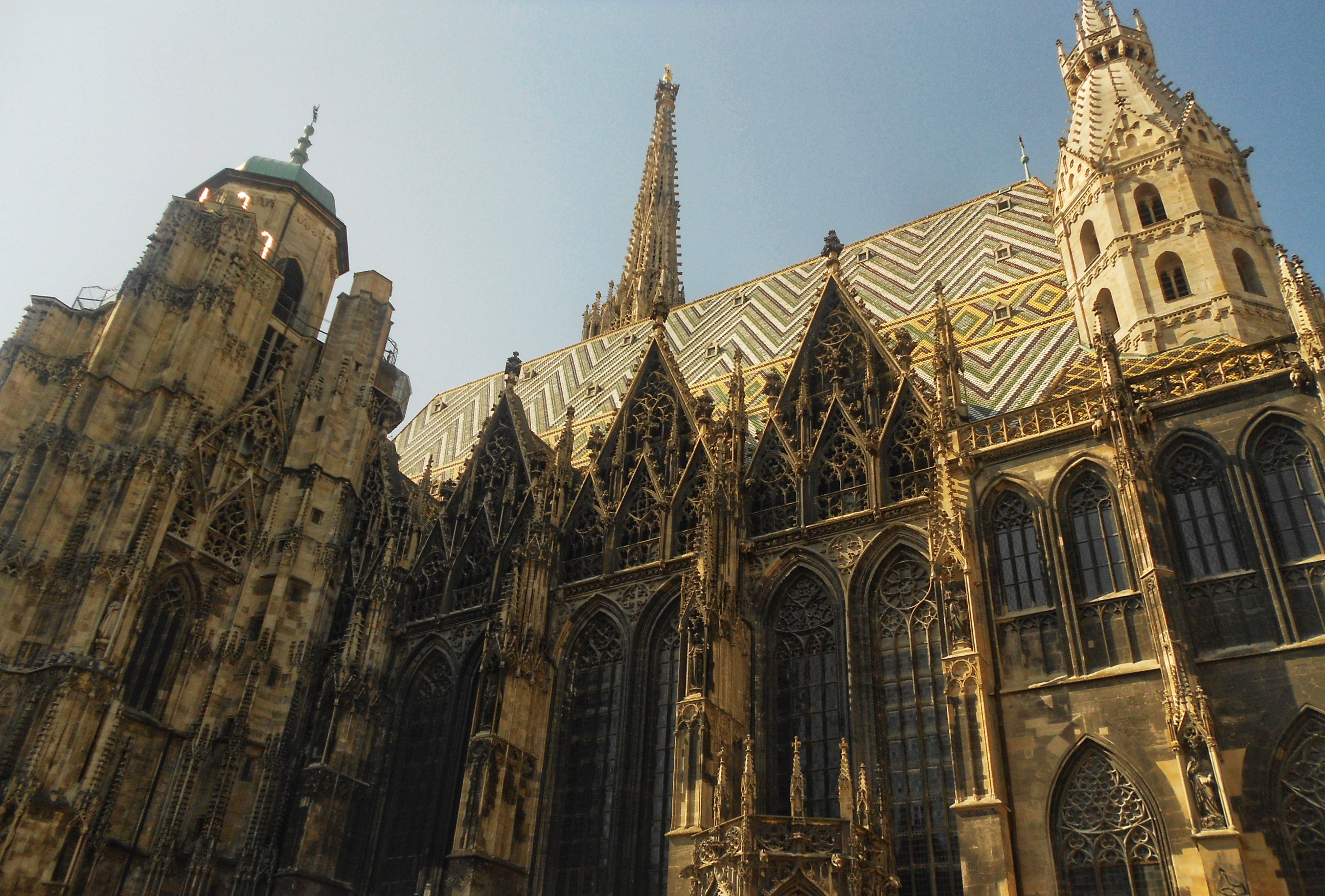
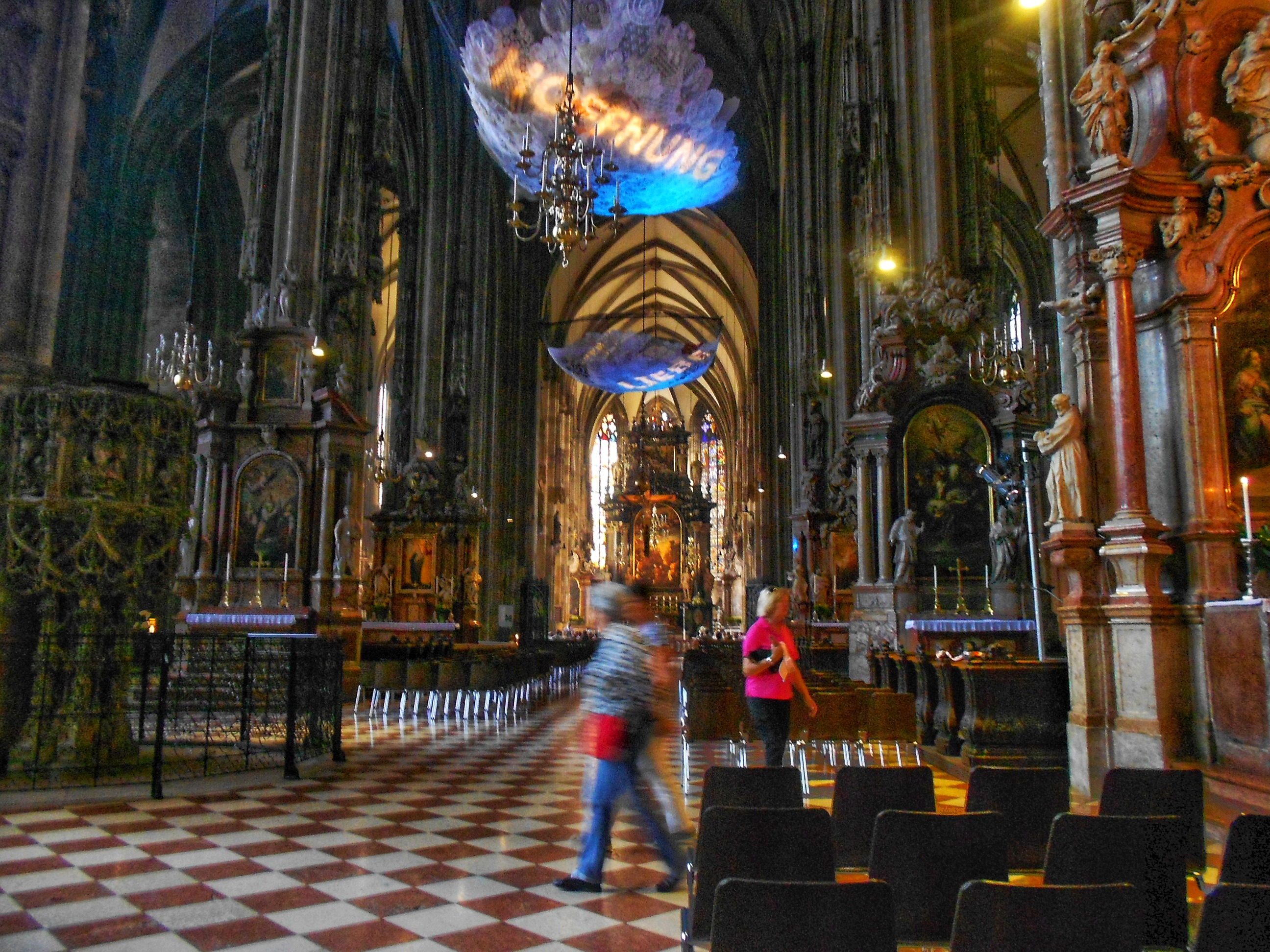
The cathedral has fine-looking roof tiles. It stands tall, and inside there was an exhibition being held. St. Stephen’s Cathedral is often called “Wiener Steff” (Little Stephen in Viennese). The church overlooks Stephansplatz (Stephens Square). St. Stephen’s can be found in the heart of Vienna. The Pummerin is the largest bell of the cathedral. It weighs 20 tons. It happens to be the second biggest free-running bell in the world after St. Peter’s bell in Cologne, Germany. St. Stephens was first constructed in 1147 in gothic design, and later, under the Habsburg reign, it was extended using Romanesque design elements. Like most churches in Europe, it’s free to enter.
Address:Stephansplatz 3, 1010 Wien, Austria
Website: http://www.stephanskirche.at/
Dominican Church (Dominikaner Kirche)
The murals inside the Dominican church are vibrant. Yet this church isn’t as popular as St. Stephan Cathedral. This means that Dominican Church was almost empty when I visited. I could take photos and spend my time looking at everything I wanted to. The church was built in the baroque style. The official name of the church is Maria Rotunda, but it’s popularly known as the Dominican church. Construction started in the 17th century. The moulding, altar, and murals are wonderful to see while avoiding the other crowded spots in Vienna.
Address: Postgasse 4, 1010 Wien, Austria
Website: https://www.erzdioezese-wien.at/Wien-Maria-Rotunda


Mozart House
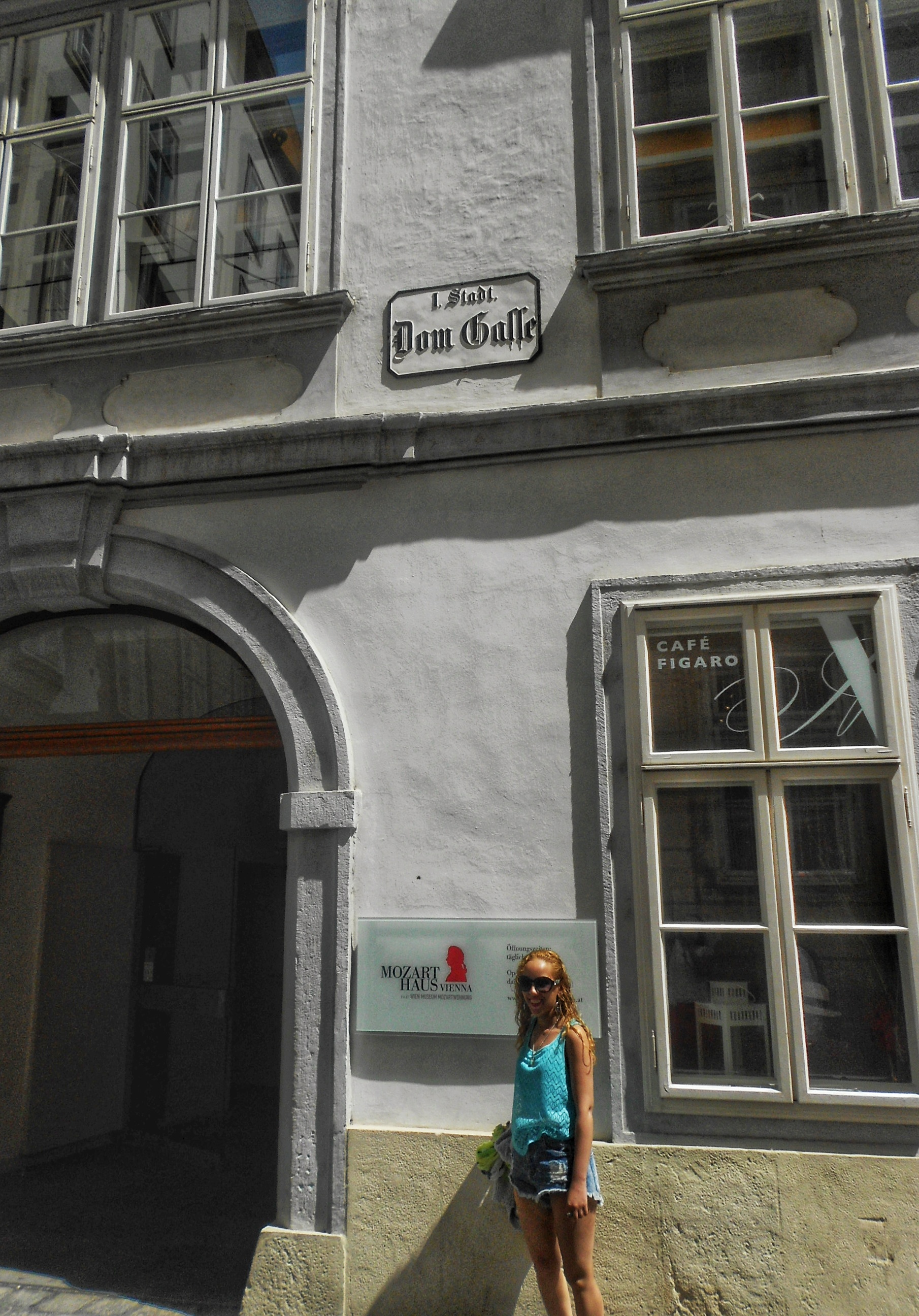
This was the most expensive apartment that Mozart lived in during his lifetime. Mozart and his family lived in the apartment from 1784 till 1787. The apartment is rather gorgeous inside and remains exactly as it was during Mozart’s occupancy. I especially liked the gaming room. It was interesting to see what apartments looked like way back when. I used to study music, so seeing the inside where Mozart once lived was unforgettable for me. The afternoon in Vienna was sweltering, and Mozart’s house gave me respite from the cooking sun. You can purchase concert tickets and listen to Mozart’s music inside the house where he used to host concerts. Tickets start at €39; buy them from the museum’s official website. I added the link below. Be aware, though, that you cannot take photos inside the apartment. It is strictly prohibited.
Address: Singerstraße 7, 1010 Wien, Austria
Website: https://mozarthaus.at/en/
Malteskirche (Maltese Church)
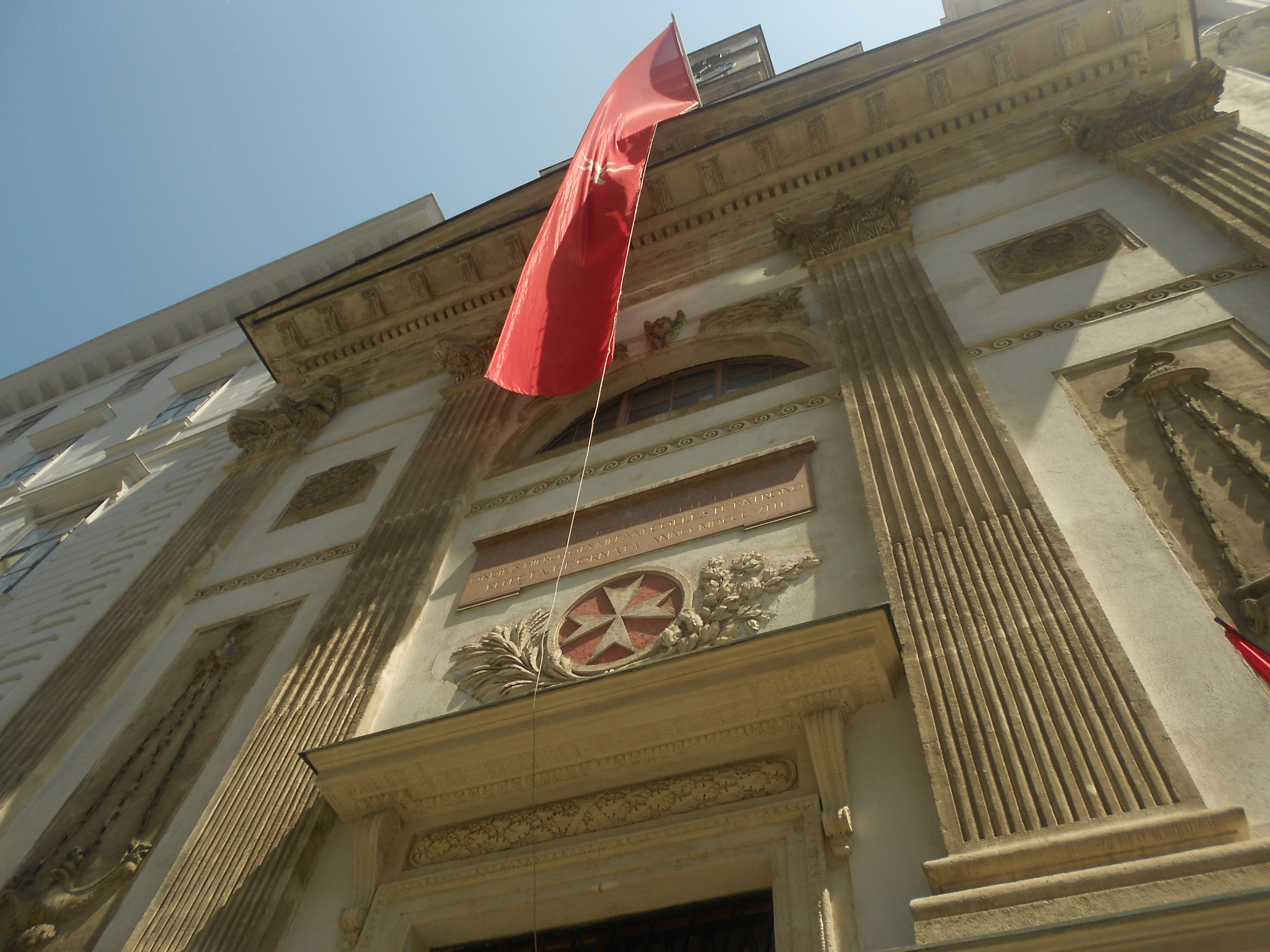
The Maltese Church was commissioned by an order to knights, the Maltese knight order, in the 15th century. The Maltese Knight Order was a booming group of crusaders who pillaged and subjugated enough places to be able to afford to construct churches and palaces in Central Europe and the Mediterranean. The Maltese knight order was called the Knights of St. John and acquired a new name after they invaded the island of Malta.
The stained glass windows were installed in 1857. The church miraculously survived the bombing during WWII. The Maltese knight order was forced to sell the church during the war. Fortunately, the order could be purchased back after the war ended with the help of a generous donor. Today there are still a number of attractive art pieces inside the church. There is an alter painting that dates back to 1730, mason work on the ceiling, a Baroque-style organ, and the tomb of Jean Parisot de La Valette, who victoriously protected Malta against an Ottoman invasion.
Address: Kärntner Str. 37, 1010 Wien, Austria
Tel: +43 (1) 533 70 99
Read more: Times of Malta
Ate at Gasthaus zu den 3 Hacken
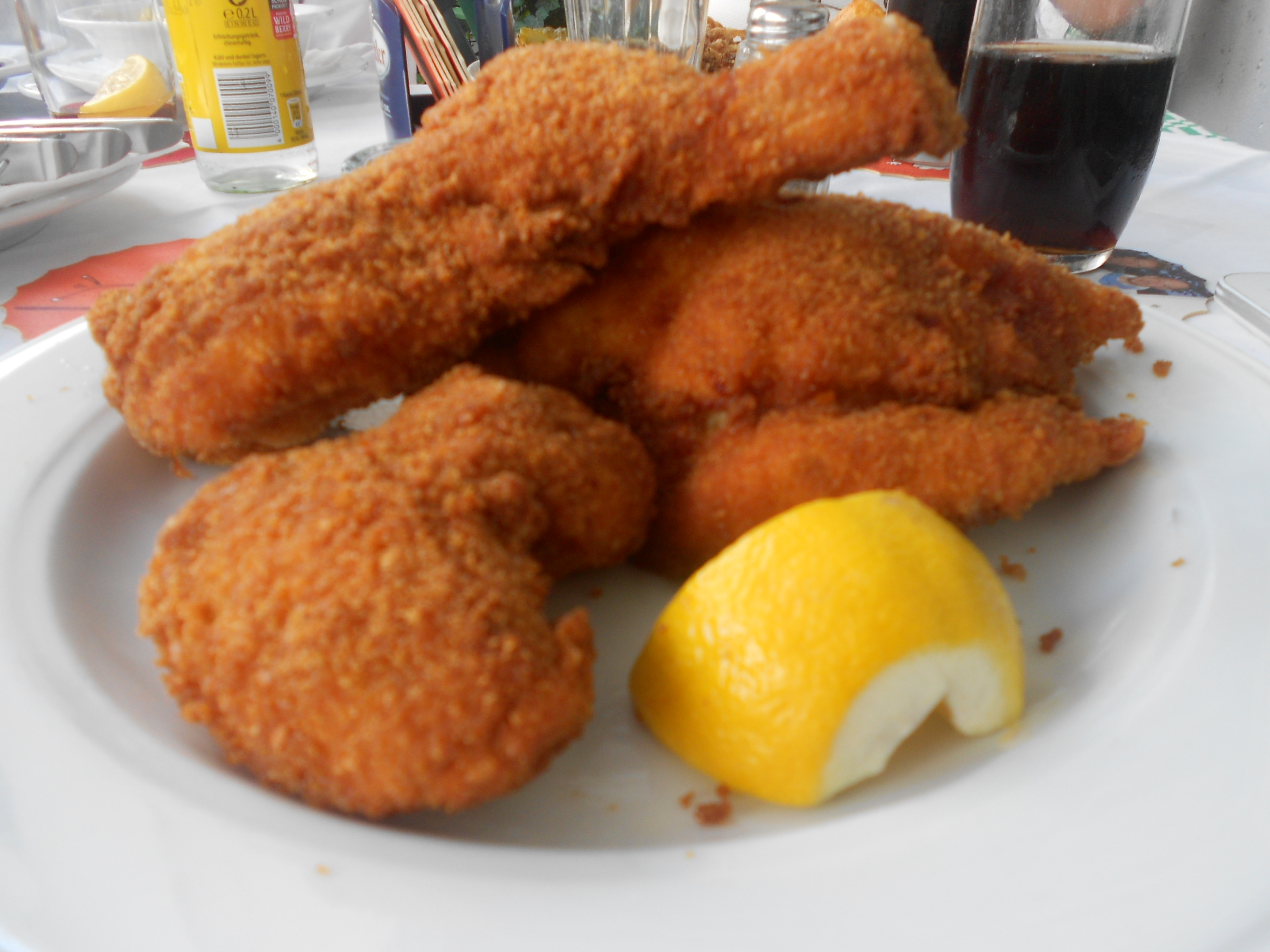
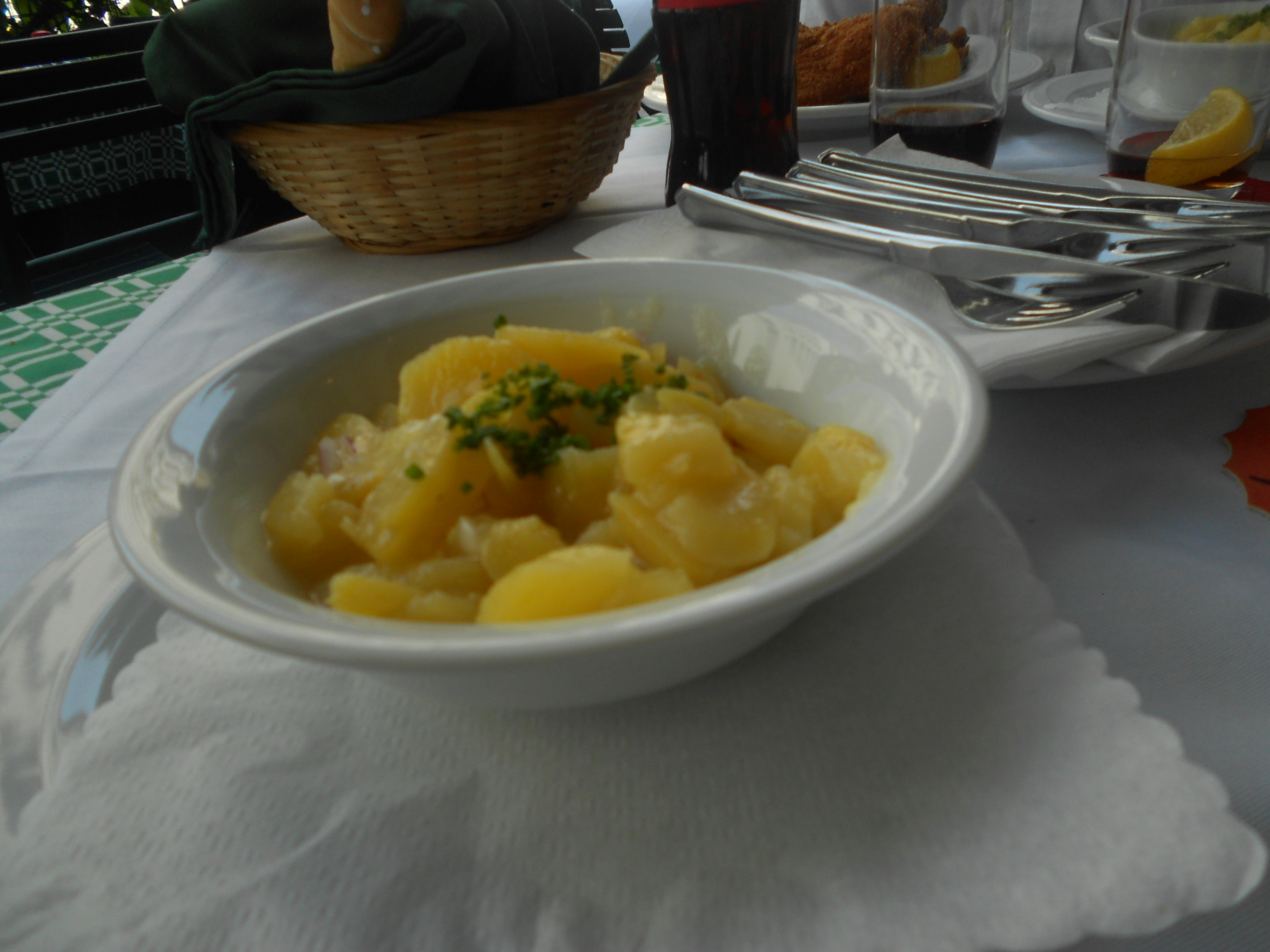
For lip-smacking food, eat at Gasthaus zu den 3 Hacken. This charismatic spot has an outside dining area that I adore. I had crumbed chicken and the potato salad. After finishing what seemed like a mountain of chicken, I stuffed myself with apple strudel. My friend Elian and I spent a lot of time eating in Vienna, and I don’t regret it at all. We were drawn in by the pretty outside seating, the service was fantastic, as was the food. And the portions were extremely generous.
Address: Zu den 3 Hacken 1., Singerstraße 28
Phone: +43 (01) 5125895
Website: http://www.vinum-wien.at
Email: gasthaus@zuden3hacken.at
Operating hours:
Mon – Fri 11:00-24:00
Sun 11:30-23:00


Gustav Klimt Exhibition
This exhibition displays authentic furniture from the 1910 era. There are reproductions of Klimt’s most important pieces. Gustav Klimt was a leader of the modern period. His Viennese style of symbolism made him an internationally recognised painter. His art peaked during his well-known Golden Period. The best part of the exhibition is the chance to see paintings such as Hygiea and Die Freundinnen, which were ruined, in addition to restored works like Die Goldene Adele. This is a unique and one-of-a kind experience that is only available in Vienna.
Address: Kärntnerstraße 13-15, 1010 Wien
Website: https://www.oew.at/exhibitions/klimptexhibition
Opening hours:Monday-Friday: 10 am–6 pmSaturday: 10 am–6 pmSunday: 10 am–6 pm
The Leopold Museum in the museum quarter is where original Klimt paintings are held.

Opera House Tour
Vienna’s Opera House is located along the famous Ringstraβe Street. It is undoubtedly one of the most beautiful opera houses in the world. My friend Elian and I booked a tour of the opera house. Both of us are keen on the theatre and have acted in plays. We knew we didn’t have time to see a performance, so an opera tour was the next best option. And it blew us away. Not only is the Viennese Opera exquisite, it is elegant with a charming atmosphere even during the daytime.
Individuals can simply go to the opera and book tour tickets. The best part of it is that there aren’t long queues. The tour was narrated in a wonderful way. Our guide was certainly knowledgeable and able to convey the information in a stimulating way. She spoke about the history, the architecture, including a room decorated with real gold, and so much more.
The Opera House was constructed in 1869. It was designed by Eduard van der Nül and August Sicard von Sicardsburg. It was regrettably damaged during World War II and was repaired and subsequently reopened in 1955. One of the highlights of the tour is that you get to see historical photos of patrons visiting the opera in Vienna, and you can also sit in the opera seats.
I find it admirable that the Vienna Opera House screens the opera and ballet performances on live screens where people can see live streaming of the shows for free. And also that you purchase standing tickets for shows just before they play for relatively cheap prices. This makes attending the performances hosted by the Opera House accessible to much more people.
Address: Opernring 2, 1010 Wien, Austria
Website: http://www.wiener-staatsoper.at
Tel: (+43) 1 514 44 2250
Tickets sales with a credit card: (+43) 1 513 1 513

Hotel Sacher
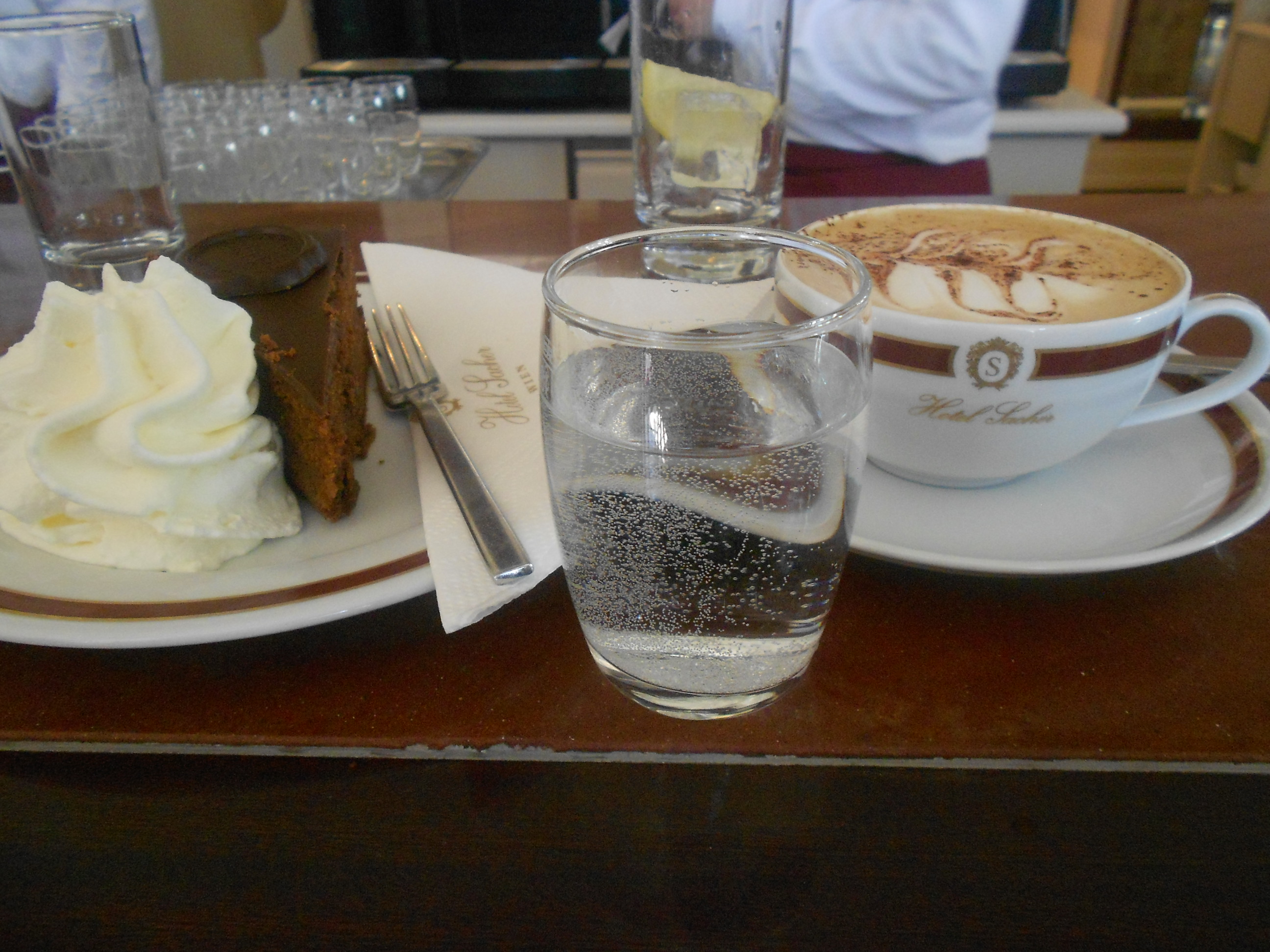
This five-star hotel is famous for its culinary speciality, Sachertorte. This is a sweet, chocolate cake with a layer of apricot jam. Many famous people have visited the hotel, including Queen Elizabeth II, John Kennedy, Grace Kelly, John Lennon, and Yoko Ono. There was a legal battle about who owned the rights to sell the Sachertorte, but that’s a post for another day. I waited in line to have a slice of Sachertorte; it wasn’t a long line; only three people were ahead of me. The cake was flavourful. The interior of the hotel is elegant. My friend, her then boyfriend, and I sat at the bar. The bartender was very approachable. He even spoke in German with my friend Elian, who was practicing her German.
Address: Philharmoniker Str. 4, 1010 Wien, Austria
Karlskirche (St. Charles Church)
Elian and I stumbled across St. Charles along the way to the Museum Quarter. I saw immediately that the building was a church. The church has an enormous cupola. I prefer Baroque and Romantic-style architecture, and St. Charles is a marvellous example of Baroque-styled buildings. The church was designed by Johann Bernhard Fischer von Erlach and was completed by his son Joseph Emanuel Fischer von Erlach in 1739.
If you are a classical music enthusiast, then head over to St. Charles Church concerts, which include Mozart’s Requiem and Vivaldi’s Four Seasons. Additionally, Advent time sees distinctive gospel singing permeating in the church.
Address: Karlsplatz, 1040 Wien
Website: www.karlskirche.at
Tel: (+43) 1 505 62 94
Opening times:
Mon-FFri 07:30-119:00
Sat 08:30- 19:00
Sun 09:00- 19:00
On holidays 12:00 – 19:00
Operating hours of the panoramic elevator:Mon-Sat: 9.00 am – 5.30 pmSun: 12.00 noon – 6.30 pm

Parliament
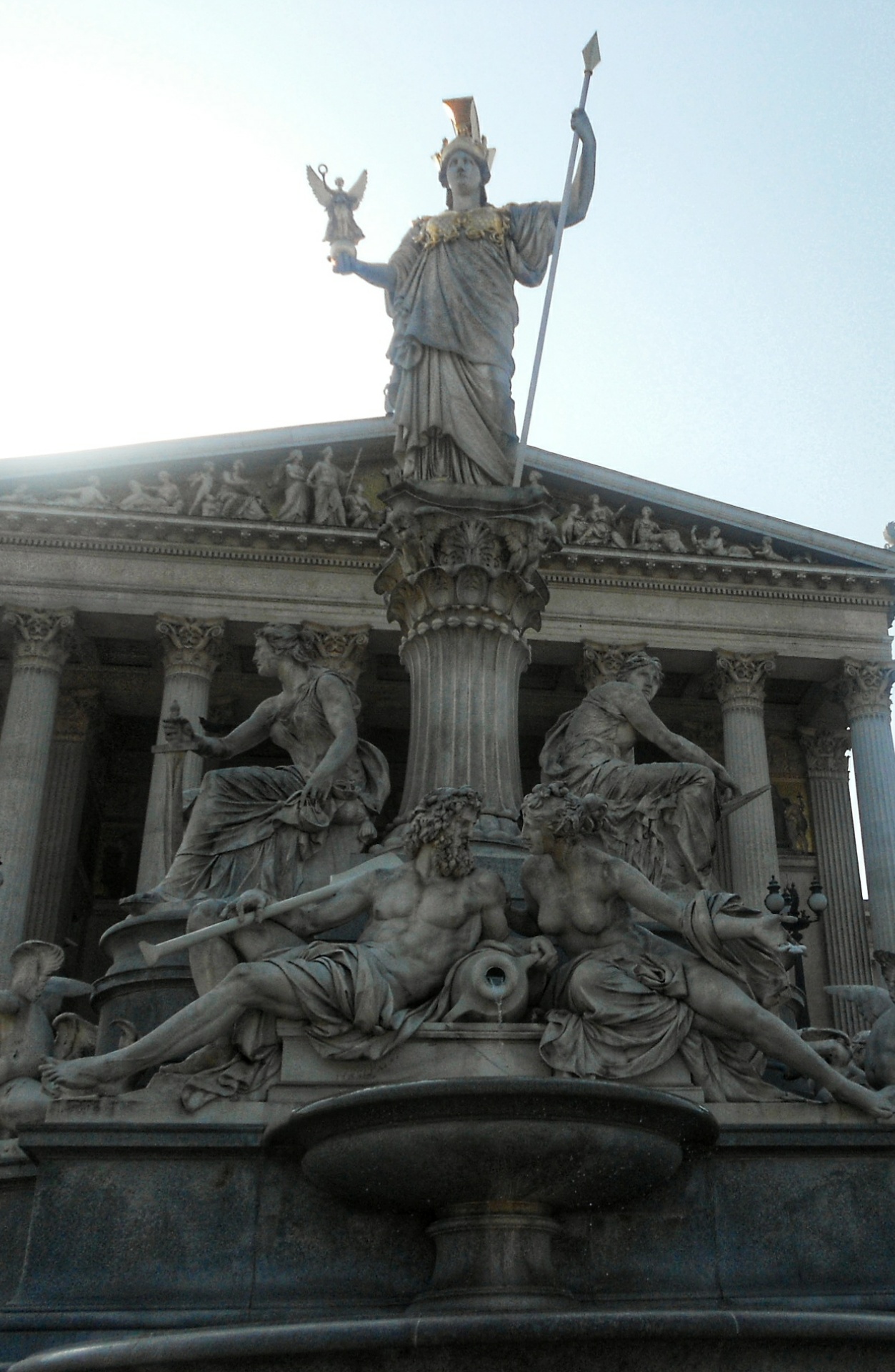
I took photos outside of the Parliament building and then had to rush to get to my bus. The building is another architectural highlight of Vienna. It looks palatial The building is huge. Theophil Hansen designed the design. Hansen was a scholar of classical Greek architecture. The Parliament is built in the neoclassical style. The Greek influence of the Austrian Parliament is clear as the Parliament features towering white columns and statues of Greek and Roman historians and gods.
Ringstrasse (Ringstraβe)
The Ringstrasse boulevard includes many historical buildings, including the State Opera, the Museum of Art History, the Museum of Natural History, and the Parliament. Emperor Franz Joseph I, who came into power in 1848, introduced these architectural changes. Different architectural styles through various periods of Vienna’s development can be found along Ringstrasse. You can walk along the street or take the public tram line 1. It was €1 or take a historic tram, which costs €8.

As usual, thank you for reading my blog. I appreciate you. Please feel free to comment or chat with me. I would like to know from you if I should add the information after every location. The address and website, etc., or do you find it distracting whilst reading?
I will be posting much more Christmas related posts soon, as it is the festive season. Hope you are enjoying this time of year as much as I am.
Happy holidays!


 Nikkidiscovers
Nice post..Vienna is still in my bucket list… 🙂
LikeLiked by 1 person
Thanks its one of the places I enjoyed visiting and far less crowded than Venice or Paris
LikeLiked by 1 person