
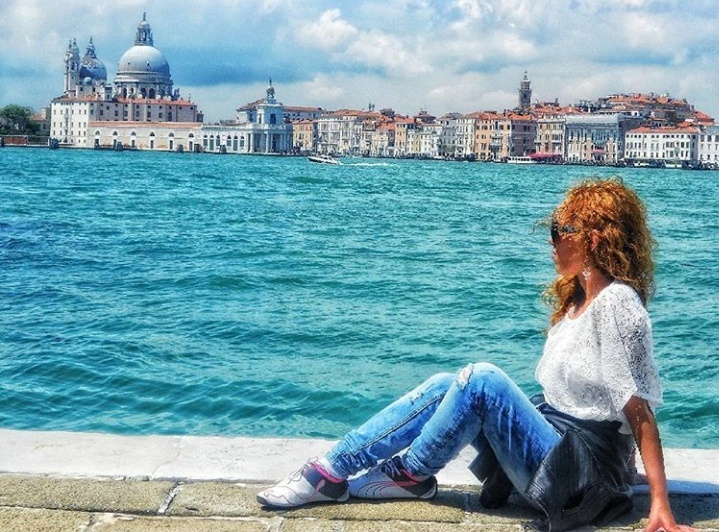
On the 20th of February 2018, I attended a poignant dialogue hosted by the Institute of Justice and Reconciliation, focusing on gender challenges. The discussion, while centered on women, also embraced the LGBTQIA community. I heard powerful testimonies from women confronting gender discrimination and working towards ending gender inequality. It’s evident that South Africa, my beautiful homeland, grapples with severe gender violence, often described by political commentators as a silent gender civil war.
However, gender injustice is not confined to South Africa—it’s a global issue. During the dialogue, the #MeToo and #EndRapeCulture movements were highlighted, showcasing how widespread gender violence is. From Cape Town to Cologne, this issue transcends borders. For instance, Germany only recently revised its rape laws. Prior to the 2015 Cologne New Year’s Eve sexual assaults, the law required victims to physically resist their attackers for the assault to be considered a crime. Simply saying “no” was insufficient. During that time, I was in Germany, but thankfully, I had gone to the Netherlands for the Christmas break and stayed there for New Year’s Eve. Reading about the Cologne incidents was disheartening and infuriating. It could have been me. Even in a developed country like Germany, similar issues persist, though at different levels. Unfortunately, German law still falls short, particularly in cases involving drugged victims.
Gender violence intersects with travel, particularly solo travel for women, which has become a highly politicized issue. Media often reports on violence against solo female travelers differently compared to incidents involving male solo travelers. Women who travel alone frequently face criticism and concern from friends, family, and even strangers. I’ve experienced this firsthand. For instance, in February 2015, Argentine backpackers Maria Coni and Marina Menegazzo were tragically assaulted and murdered in Ecuador. Despite their dire circumstances, they were criticized for traveling solo. Their case sparked a significant response from the public, including a powerful Facebook post by Paraguayan student Guadalupe Acosta. Guadalupe’s post, written from the perspective of Maria and Marina, highlighted the double standards and victim-blaming faced by women:
“And only when dead I realised that no, that for the rest of the world I was not like a man. That dying was my fault, and it will always be. While if the headline would have said ‘two young male travellers were killed’ people would be expressing their condolences and with their false and hypocritical double standard speech would demand higher penalty for murderers. But being a woman, it is minimised. It becomes less severe because of course, I asked for it… I ask you, on behalf of myself and every other woman ever hushed, silenced; I ask you on behalf of every woman whose life was crushed, to raise your voice. We will fight, I’ll be with you in spirit, and I promise that one day we’ll be so many that there won’t be enough bags in the world to shut up us all.”
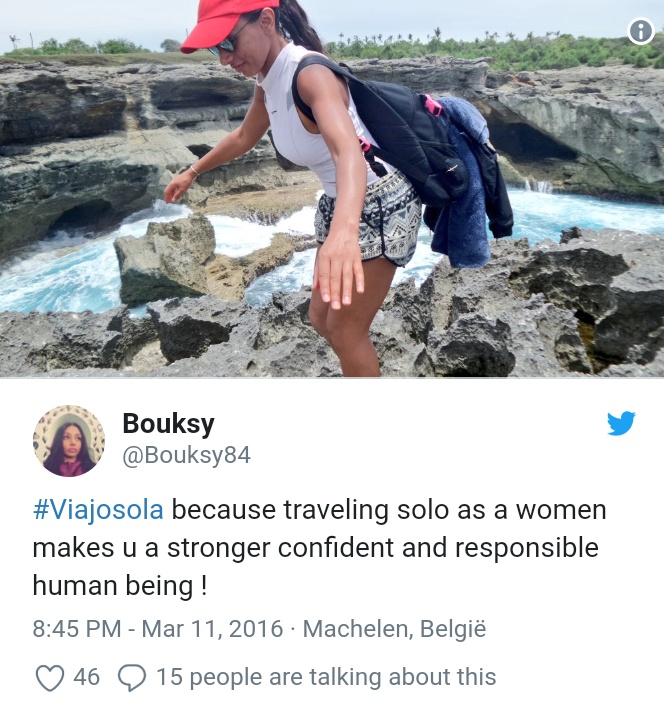
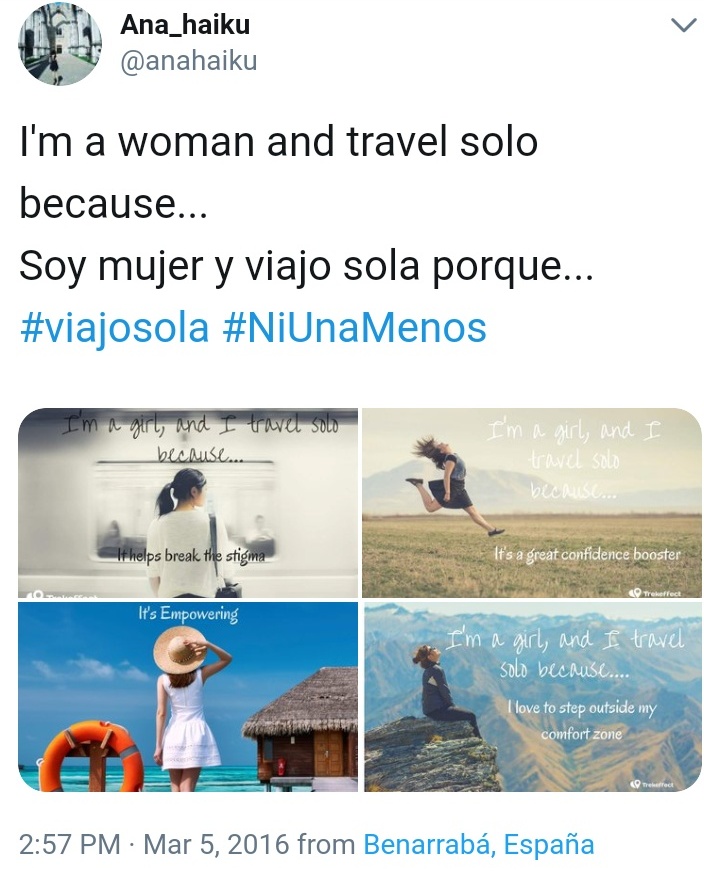
In response to victim-blaming, solo female travelers began sharing their experiences publicly. The hashtag #viajosolaspread, which means “I travel alone” in Spanish, gained traction, with women posting photos of themselves traveling solo. This movement, which gained momentum after the tragic murders of Maria and Marina, was a powerful act of solidarity and resistance.
I’ve read the articles, seen the comments, and witnessed the tweets from solo women travelers standing in support of Maria and Marina. Their bravery and unity underscore the ongoing struggle against gender-based violence and victim-blaming.
Women deserve the freedom to travel without fear, yet victim blaming remains a pervasive global issue. Recently, the tragic death of Amelia Blake, a 22-year-old British tourist in Australia, highlighted this troubling phenomenon. According to The Independent, a neighbor’s comment, “I feel sorry for the girl. My first reaction was ‘she’s 22? A bit young to be on her own,’” reflects a disturbing form of victim blaming. Despite being an adult and living independently with her boyfriend, Amelia’s tragic fate was met with undue scrutiny.
So, how can we combat this ingrained culture of victim blaming? There is hope. The rise of hashtag movements has fostered important dialogues and increased awareness. Organizations like the Institute for Justice and Reconciliation (IJR) are actively addressing patriarchy and toxic masculinity. Women are leveraging social media to amplify their voices, but this is just the beginning.
To effect lasting change, it’s crucial to engage young boys and men in discussions about gender, consent, and toxic masculinity on a global scale. Furthermore, women should continue to travel solo to challenge the misconception that solo female travelers are irresponsible. My own solo travels to Germany, Italy, Austria, the Netherlands, Belgium, and France in 2015 and 2016 were enriching and transformative experiences. Although I look forward to a safer world for travelers, I remain committed to advocating for solo travel, conducting research, and ensuring my own safety while traveling.
I will persist in writing articles to promote solo travel, engaging in constructive debates with those who doubt women’s ability to travel alone, and addressing these critical issues in both my academic and social writing. Following Guadalupe Acosta’s call, I will continue to raise my voice.
For more information on gender violence and victim blaming, consider exploring the following resources:
Institute for Justice and Reconciliation (IJR)
Marie Claire on Violence Against Women in South Africa
Statistics South Africa Report
DW on Germany’s Broadened Rape Definition
BBC on Cologne Assaults
CNN on Solo Female Travelers
The Independent on Amelia Blake’s Death
The Guardian on South Australia Backpacker Attack
Thank you for reading. Feel free to contact me for further discussion or inquiries.
Wishing you safe and fulfilling travels,


 Nikkidiscovers
Nicely Done
LikeLiked by 2 people
Your support means a lot. Thought no one would read this post .
LikeLike
Well I did a d I forwarded it to my Facebook page
LikeLiked by 1 person
Thanks again 😊
LikeLike
Thank you
LikeLike