
Please note: This article discusses nudity.
Throughout my travels in Europe, I often wondered why so many sculptures were depicted in the nude. Fellow travelers also questioned why these sculptures were naked, and I couldn’t help but laugh at the sight of nude soldiers on the Arc de Triomphe (Arch of Victory) in Paris—talk about inappropriate battle attire! The nudity didn’t make sense to me at all. Although I’m not an art historian, I love art and was curious enough to research this topic. I discovered that many of these sculptures are classical Grecian or Roman pieces, or they follow a similar style. If you’ve ever wondered about this, here’s what I found.
Nudity was integral to Greek culture; it symbolized heroism, defeat, and the labor of hardworking individuals. Greeks were nude in gymnasiums and during competitions. The first Olympics featured nude athletes competing against each other. As Sorabella (2018) notes, “The nude first became significant in the art of ancient Greece, where athletic competitions at religious festivals celebrated the human body, particularly the male, in an unparalleled way. The athletes in these competitions competed in the nude, and the Greeks considered them the embodiments of all that was best in humanity.” Greek society celebrated male athletes and their bodies, viewing them as the epitome of perfection. I observed that male nudes often share similar muscular lines.
The Greeks also depicted gods and godlike mortals in the nude. According to the British Museum, “There is a tendency towards nudity (in sculpture) which is not true in any other civilisation. The Egyptians, Persians, and Assyrians found it shameful. But to the Greeks, it represented the mark of a hero. It was not about representing the literal world, but a world which was mythologized.” Nudity was linked to heroism and the gods: “Athletic nudes portrayed the gods and heroes of the Greek religion” (Sorabella, 2018). Sorabella points out that while other cultures viewed nudity as shameful, the Greeks celebrated it (Sorabella, 2018). A quick Wikipedia search confirms this: “Heroic or ideal nudity is a concept of classical scholarship to describe the use of nudity in classical sculpture to indicate that the sculptures’ apparently mortal human subject is, in fact, a hero or semi-divine being.” This concept of heroic nudity began in ancient Greece and continued into the Roman and Hellenistic periods.
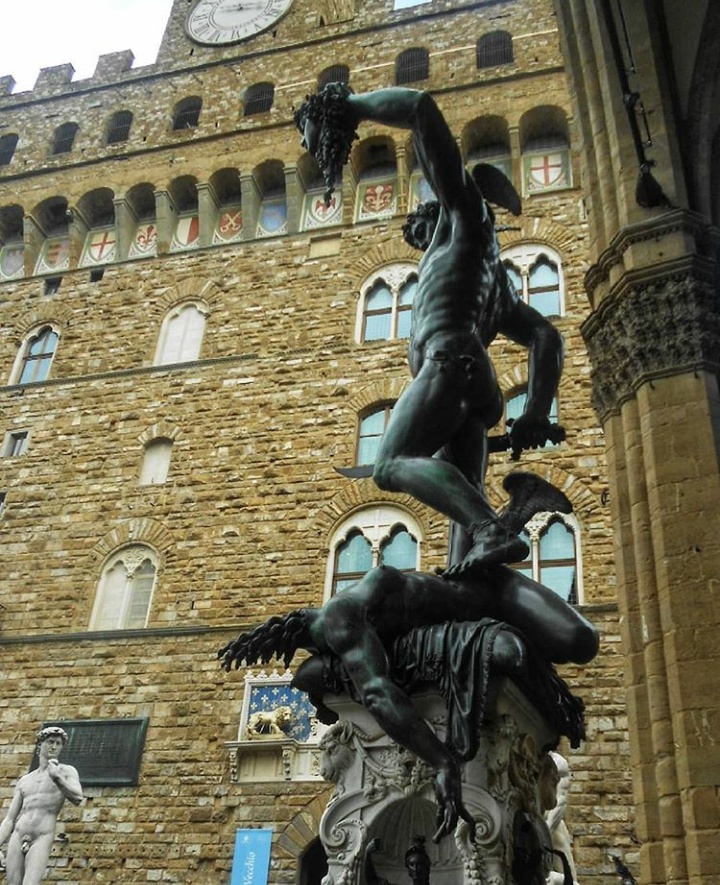

Nudity in ancient art wasn’t always a symbol of heroism. Binns (2007) references Hurwit, who notes that nudity was also used to depict the vulnerability of conquered soldiers and to highlight the strenuous labor of workers by emphasizing their sweat and muscles.
Understanding this, it makes sense why Greek and Roman statues are often naked. It also clarifies why the soldiers on the Arc de Triomphe are depicted in the nude—they are honored as heroes, as the arch commemorates the soldiers who fought for France. This style of sculpture has influenced Western art, and although their attire might seem unusual to a casual observer, it now has a clear context. These soldiers exemplify heroic nudity, celebrating their valor.
In summary, nudity was a significant aspect of ancient Greek life. The male form was celebrated, and nudity was common in sporting events. Heroic nudity was used to convey divinity or heroism, while it could also depict defeat and vulnerability. Most Grecian-Roman sculptures represent nudity in its heroic form. I’ll be exploring male genitalia in nude sculptures and female nudes in future posts, so if you’re interested in art and want to see more photos from my travels in Europe, keep reading my blog.
Sources Used:
- Binns, C. (2014). Why Ancient Greeks are Always Nude. Retrieved from: Live Science
- Singh, A. (2015). British Museum Explains Why Greek Statues are Naked. Retrieved from: The Telegraph
- Sorabella, J. (2008). The Nude in Western Art and Its Beginnings in Antiquity. Retrieved from: The Met Museum
- Brouwers, J. (2018). “Heroic” Nudity? Naked Men in Ancient Greek Art. Retrieved from: Ancient World Magazine
- Kousser, R.M. (2008). Hellenistic and Roman Ideal Sculpture. Cambridge: New York, Cambridge University Press
- Mount, H. (2015). The Ancient Greeks Knew It Wasn’t Rude to Be Nude. Retrieved from: The Telegraph
Thank you so much for reading. Did you love or dislike this post? Feel free to share your comments; I enjoy reading them. For direct communication, you can email me. I’m also open to constructive criticism.
Happy travels!

Binns, C.(2014). Why Ancient Greeks are Always Nude, from:https://www.livescience.com/4315-ancient-greeks-nude.html
Singh, A.(2015). British museum explains why Greek statues are naked, from: https://www.telegraph.co.uk/news/newstopics/howaboutthat/11333473/British-Museum-explains-why-Greek-statues-are-naked.html
Sorabella, J.(2008). The Nude in Western Art and Its Beginnings in Antiquity, from: https://www.metmuseum.org/toah/hd/nuan/hd_nuan.htm
Read more:
Brouwers, J.(2018). “Heroic” nudity?-Naked men in ancient Greek art, from: https://www.ancientworldmagazine.com/articles/heroic-nudity-naked-men-ancient-greek-art/
Kousser, R.M. (2008). Hellenistic and Roman Ideal Sculpture, Cambridge: New York, Cambridge University Press
Mount, H.(2015). The ancient Greeks knew it wasn’t rude to be nude, from:https://www.telegraph.co.uk/culture/museums/11352482/The-ancient-Greeks-knew-it-wasnt-rude-to-be-nude.html
Thank you so much for reading. Did you love this or hate this post? If you have any comments please feel free to share them. I love reading comments on my blog. If you want to talk to me directly you can email me. And I’m open to criticism too.
Happy travels!
xxx Nikki xxx

 Nikkidiscovers
Interesting read. I learned something new though it is rather contradictory
LikeLike
It is even the academics contradict themselves. So I tried to reflect that. Glad you found it interesting 😊
LikeLiked by 1 person