
The Acropolis of Athens stands as one of the most iconic landmarks in the world. Perched atop a rocky hill overlooking the city, the Acropolis has been a hub of human activity since prehistoric times and showcases some of the most significant cultural and architectural achievements of ancient Greece.
Among the Acropolis’s treasures, the Parthenon shines as the most famous structure. This majestic temple, dedicated to Athena—the goddess of wisdom, war, and the protector of the city—represents the zenith of classical Greek architecture. Constructed between 447 and 432 B.C., the Parthenon is renowned for its elegant proportions and sophisticated engineering, which have profoundly influenced architects throughout history. Athens, named after Athena, reflects the goddess’s legacy of wisdom and practical reason through this architectural marvel.
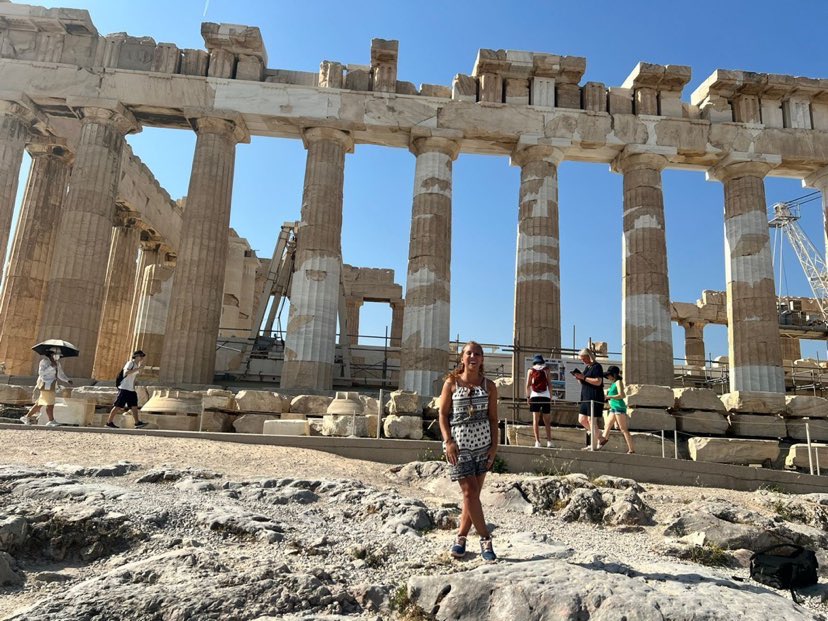
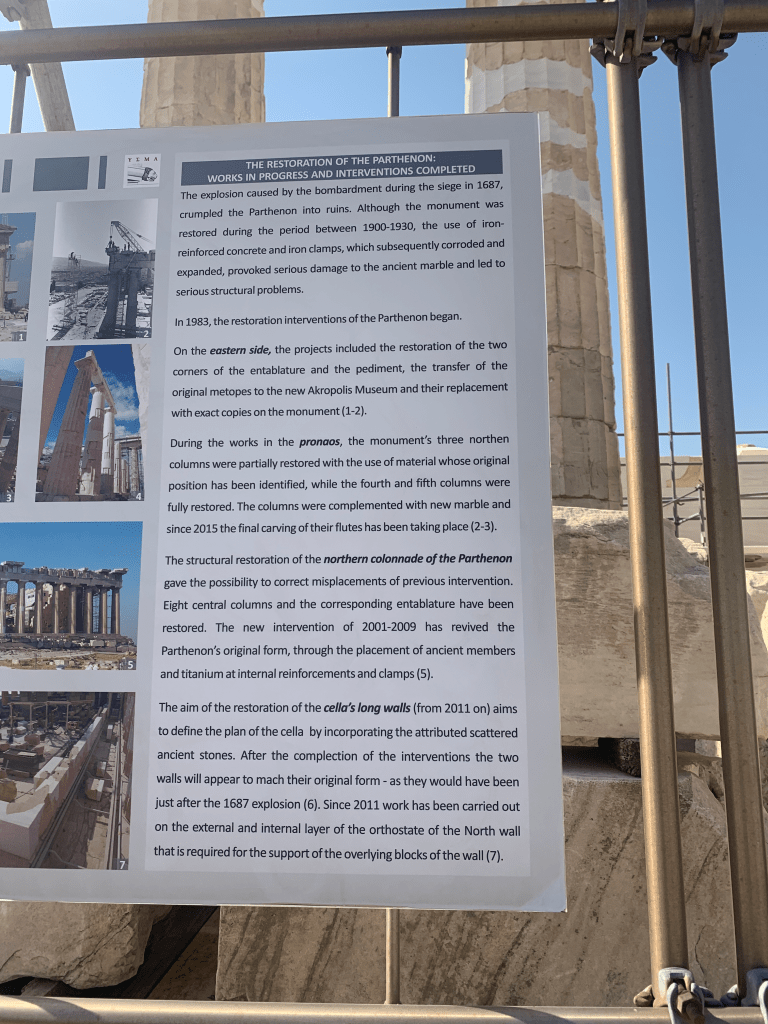
Despite being damaged by earthquakes, invasions, and explosions over the centuries, the Acropolis and its structures have endured as symbols of ancient Greek culture. The restoration efforts are ongoing to preserve the site. When I visited in May 2022, there was extensive construction taking place at the site. The image below explains the work being done and states that the bombardment during the siege of 1687 destroyed the Parthenon to ruins. Attempts to reinforce the ancient structure actually caused more damage. The text in the image goes into much more detail. And although it makes for images of ancient structures with building operations in the background, I’m very happy that history is being preserved. People are at least trying to restore the structures.
The Propylaea
As you approach the Acropolis, you’ll first see the Propylaea, a monumental gateway that once served as the entrance to the sacred precinct. The Propylaea was built in the 5th century BC and is an impressive display of Doric architecture, with six columns supporting the central portico.
The Doric Order of Greek architecture was the first style of stone temple architecture in ancient Greece. It became popular in the Archaic Period, roughly 750-480 BCE, and replaced the previous style of basic, wood structures. The Doric Order was the first style of Classical Architecture, which is the sophisticated architectural styles of ancient Greece and Rome that set the standards for beauty, harmony, and strength for European architecture. The other two orders are Ionic and Corinthian. Doric Order is recognizable by two basic features: the columns and the entablature.”
Source: Study.com

The Temple of Athena Nike
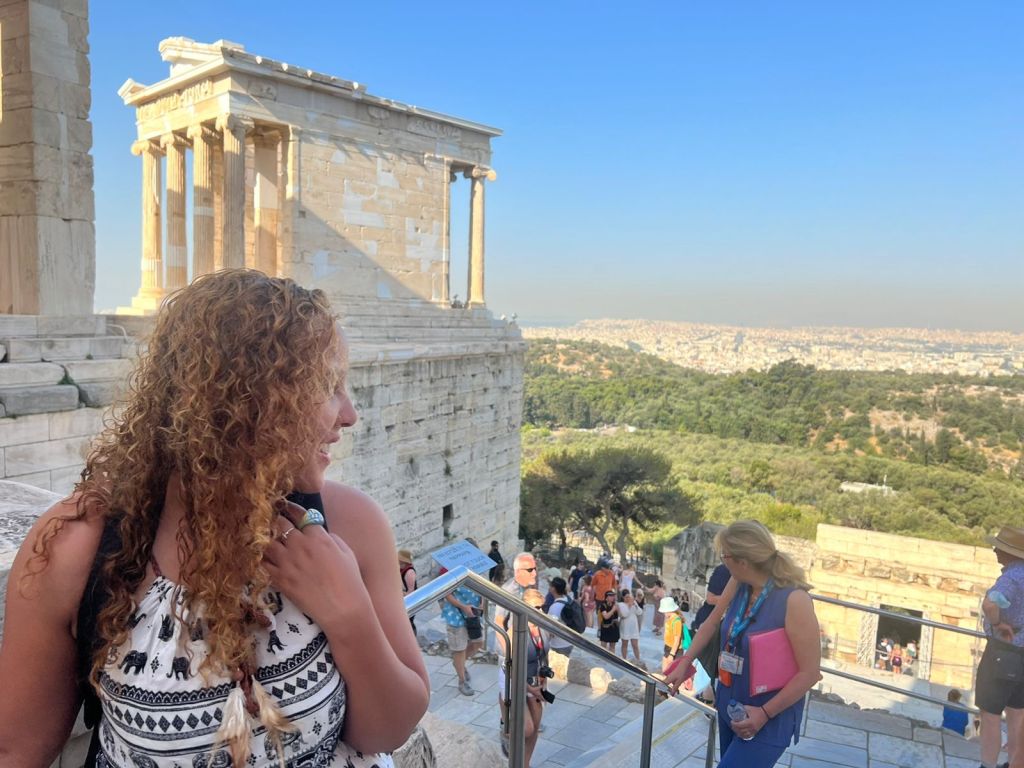
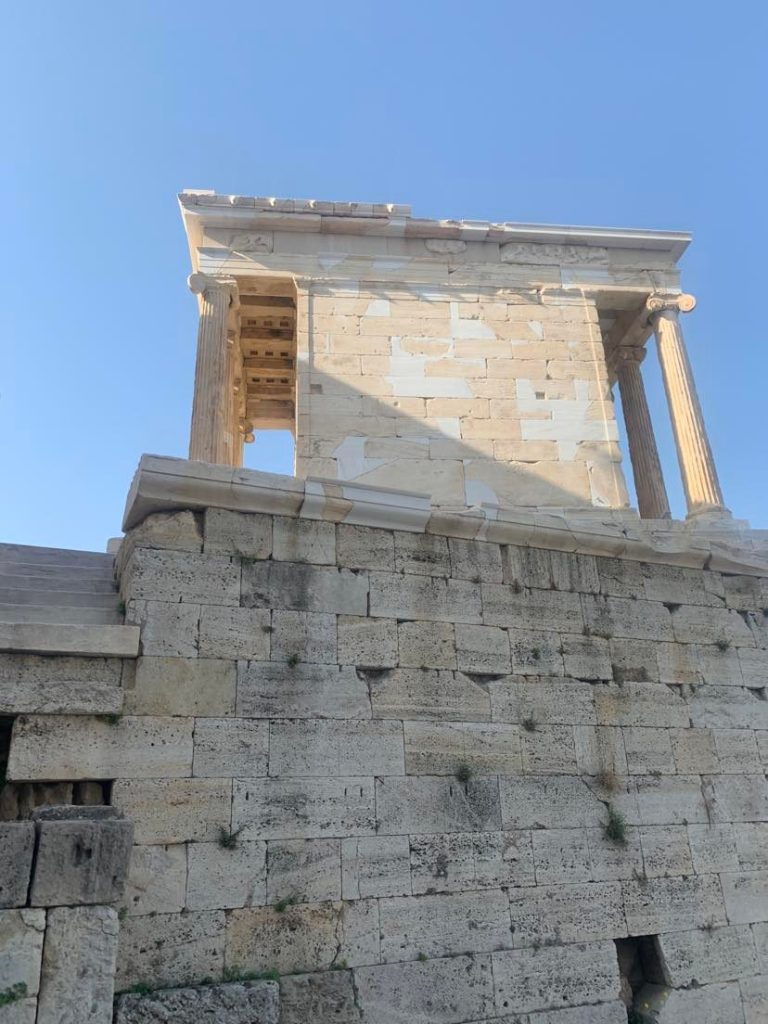
As you explore the Acropolis, don’t miss the Temple of Athena Nike, a charming small temple dedicated to the goddess of victory. Situated at the southwest corner of the Acropolis, this temple may be modest in size, but its historical significance is immense.
Constructed in 420 B.C.E. during the High Classical Period, the Temple of Athena Nike was designed by Kallikrates, the same architect behind the Parthenon. This elegant structure replaced an earlier temple that was destroyed during the Persian Wars, a series of conflicts between the Greek city-states and the Achaemenid Empire of Persia, which spanned from 499 to 449 B.C.E. The Temple of Athena Nike’s refined design and strategic location underscore its importance in ancient Greek history, symbolising both military success and the enduring spirit of victory.
Much like other Greek temples, the Temple of Athena Nike was regarded as the sacred residence of the deity it honored. Inside, the statue of the goddess represented her divine presence, but ordinary citizens were not permitted to enter the temple. Instead, rituals were performed in front of the temple, where a small altar was located. From this vantage point, people could catch a glimpse of the sculpted figure of Athena Nike through the gaps between the temple’s columns.
Access to the temple was a privilege reserved for priestesses, who held a prestigious role in ancient Greek society. The temple housed the statue of Athena Nike, symbolising victory and commemorating the Greeks’ triumph over the Persians approximately 50 years prior. Unlike the usual depiction of Nike with wings, the statue in this temple, known as Athena Apteros, was wingless. According to the ancient Greek writer Pausanias, this design choice symbolised Nike’s permanent presence in Athens, preventing her from leaving the city.
The Erechtheion
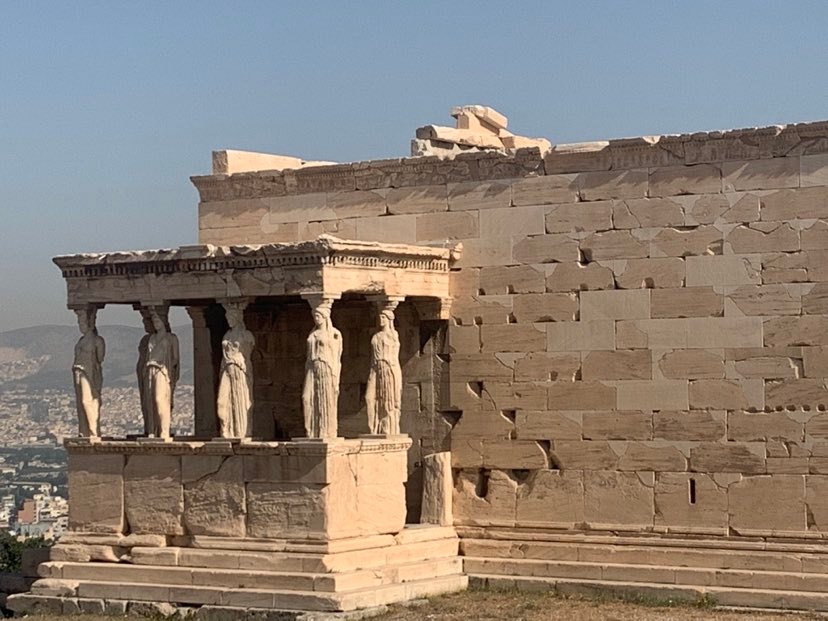
In the late 5th century BC, the Erechtheion was constructed by the architect Mnesikles as a replacement for the Ancient Temple of Athena Polias, which had been partially destroyed by the Persians 60 years earlier. This new temple was a complex marvel, designed with two main chambers to honour various deities. The eastern room was dedicated to Athena, while the lower western chamber housed shrines for Poseidon-Erechtheus, Hephaistos, and Boutes. The Erechtheion’s unique architectural design was necessary to accommodate these diverse cults within a single structure, adapting to the uneven terrain of the Acropolis.
The temple’s decoration included an Ionic frieze adorned with carved figures of gods, heroes, and mortals, likely depicting scenes related to the temple’s myths and cults. These figures were meticulously carved from Parian marble and attached to slabs of grey Eleusinian limestone using metal fasteners. The most renowned feature of the Erechtheion is its south porch, which eschews traditional columns in favour of six female statues known as Caryatids.
Five of these caryatids are displayed at the Acropolis Museum, while the sixth resides at the British Museum. The Greek government has requested the return of the missing Caryatid, but it has yet to be returned. I personally found the Erechtheion to be the highlight of my visit due to the striking Caryatid sculptures, which are a testament to the intricate artistry of ancient Greece.


The Parthenon
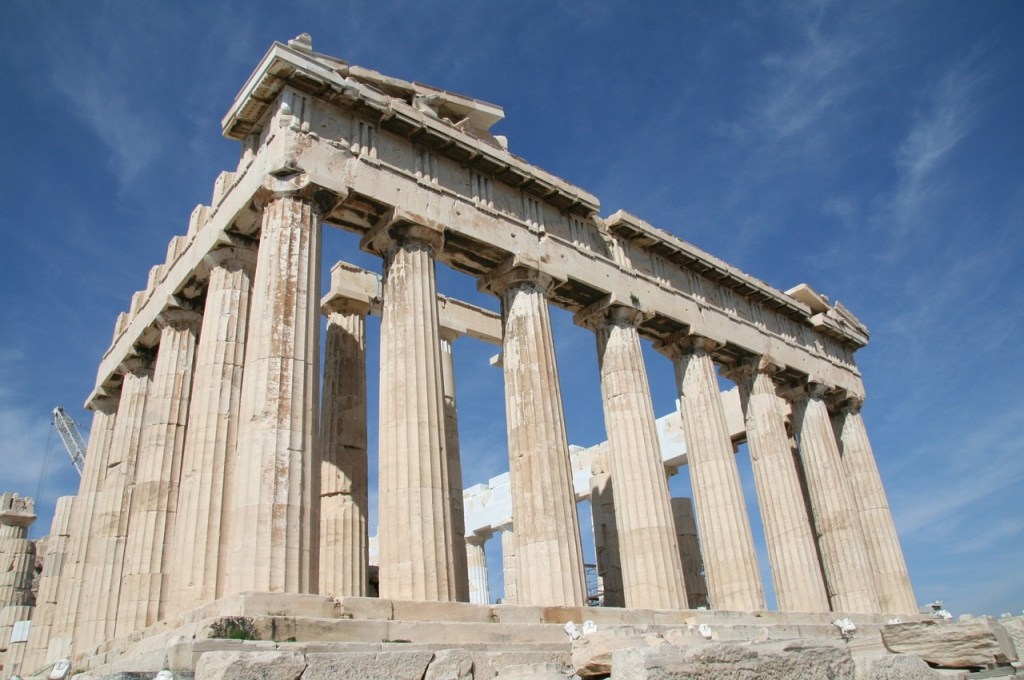
As you make your way through the Acropolis, you’ll eventually arrive at the Parthenon, the most iconic and awe-inspiring of its structures. Designed by the architect Iktinos and sculptor Phidias, the Parthenon was envisioned as the crowning jewel of the Acropolis and stands as the most magnificent temple in all of Greece.
Constructed between 447 and 432 BC, this architectural masterpiece was built using a sophisticated system of interlocking marble blocks, showcasing the height of classical Greek engineering. The Parthenon is renowned for its intricate sculptural decorations and friezes that vividly depict scenes from Greek mythology, including the famous Parthenon Marbles.
The temple’s grandeur and the elegance of its design reflect the artistic achievements of ancient Greece and have captivated visitors for centuries. During my visit, the sheer scale and historical significance of the Parthenon left me in awe, solidifying its place as the centrepiece of the Acropolis experience.

Exploring the Theatre of Dionysus from the Acropolis Summit
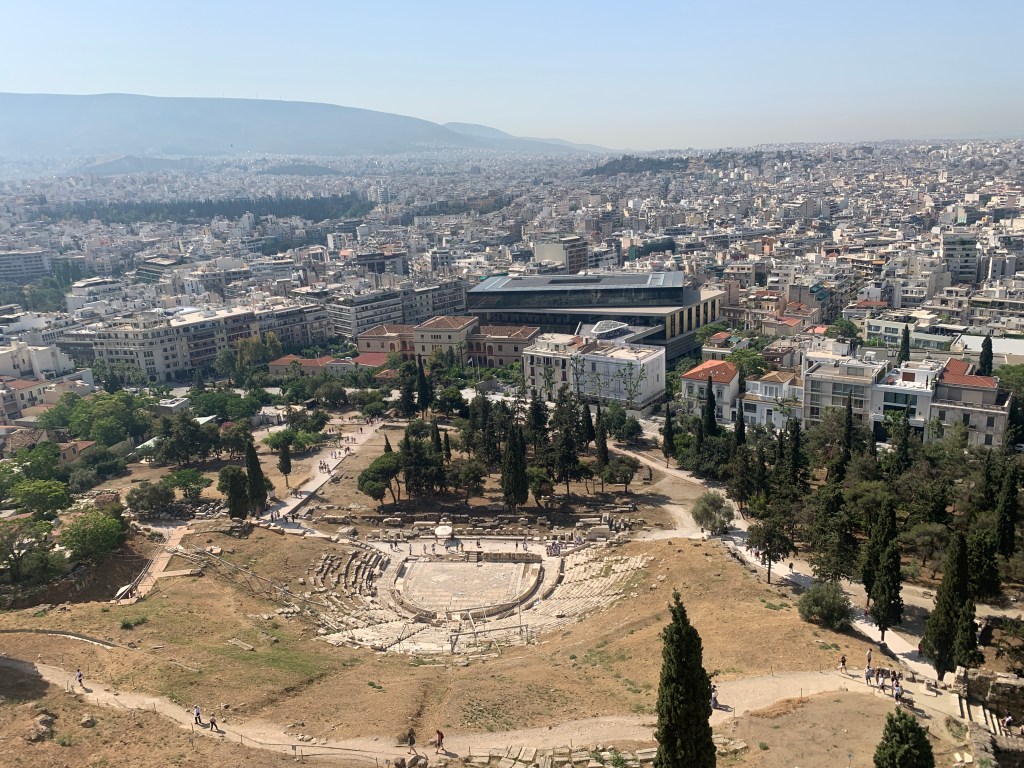
At the summit of the Acropolis, you’ll be greeted with breathtaking views of the New Acropolis Museum and the southern stretches of Athens. From this vantage point, you can also see the southern slopes of the Acropolis, including the remnants of the Theatre of Dionysus, which is prominently visible in the foreground.
The Theatre of Dionysus, originally built in the 5th century BC by the architect Lycourgos, was a grand stone and marble structure. Though now mostly in ruins, the theatre once boasted an impressive 17,000 seats. Today, only 20 rows of seating have survived. The Greek Archaeological Society began its excavation of the site around the sanctuary of Dionysus in 1838, revealing this ancient venue’s storied past. Notably, a decorative relief at the rear of the stage, dating from the 2nd century BC, depicts scenes from the life and myths of Dionysus, though many of the figures are now missing their heads.
During Athens’ golden age under Pericles, the Theatre of Dionysus hosted the annual Festival of the Great Dionysia, a major cultural event introduced in the 6th century BC by the tyrant Pisistratus. This festival featured dramas and comedies sponsored by politicians and wealthy patrons, showcasing works by legendary playwrights like Aristophanes, Aeschylus, Euripides, and Sophocles. The monument of Lysicrates stands as a testament to such sponsorship. The theatre attracted visitors from across Attica, eager to enjoy theatrical performances and festivities. Additionally, the Romans later utilised the Theatre of Dionysus for state events, ceremonies, and theatrical spectacles.
Discovering the Lesser-Known Sanctuary of Zeus Polieus on the Acropolis
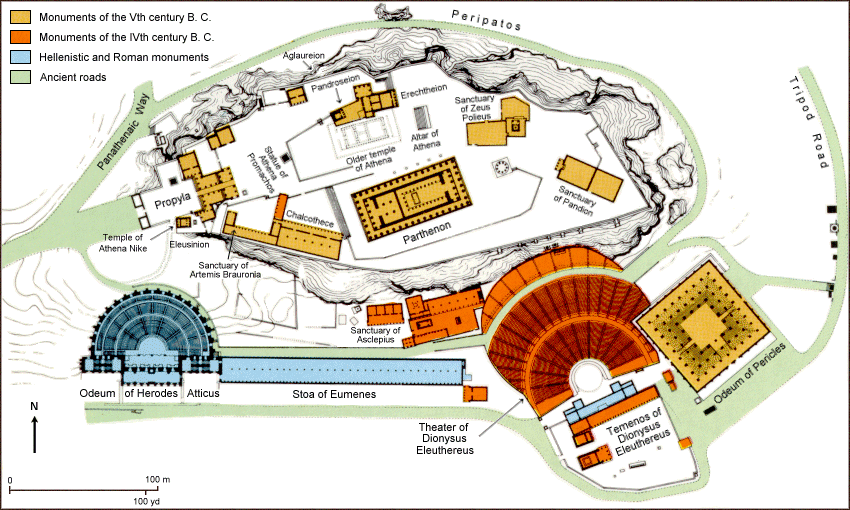
Around 500 BC, the Acropolis of Athens was home to an intriguing but lesser-known open-air sanctuary dedicated to Zeus Polieus, situated to the east of the Erechtheion. Although the sanctuary’s foundations remain undiscovered, its trapezoidal layout and multiple entrances have been reconstructed from rock carvings found on the Acropolis.
This ancient sanctuary played a significant role in the religious practices of Athens. The eastern area of the sanctuary is thought to have been used for keeping oxen, which were sacrificed during the annual Bouphonia festival. This ritual involved the ceremonial sacrifice of oxen, highlighting the sanctuary’s role in major Athenian religious events.
The main entrance of the sanctuary was adorned with a pediment, adding to its grandeur and significance. Despite its relatively obscure status today, the sanctuary of Zeus Polieus was an important site in ancient Athens, reflecting the city’s rich religious and cultural heritage.
Theatre of Herodes Atticus: A Roman Legacy in Athens
The Theatre of Herodes Atticus, an architectural marvel, was constructed by the wealthy Roman Herodes Atticus in AD 160 as a tribute to his beloved wife, Regilla. This remarkable structure boasts a radius of 38 meters and can accommodate over 5,000 spectators. Its seating, crafted from exquisite marble, enhances its historical grandeur.
Discovered in 1857-58, the Theatre of Herodes Atticus underwent significant restoration between 1950 and 1961. Today, it serves as a vibrant cultural hub during the Athens Festival, which takes place every summer. The theatre hosts a diverse range of performances, including musicals, dance, and theatrical plays. Renowned artists and performers from around the globe grace its stage, creating an unparalleled ambiance that captures the essence of ancient and modern artistry.

Breathtaking Views of Athens from the Acropolis
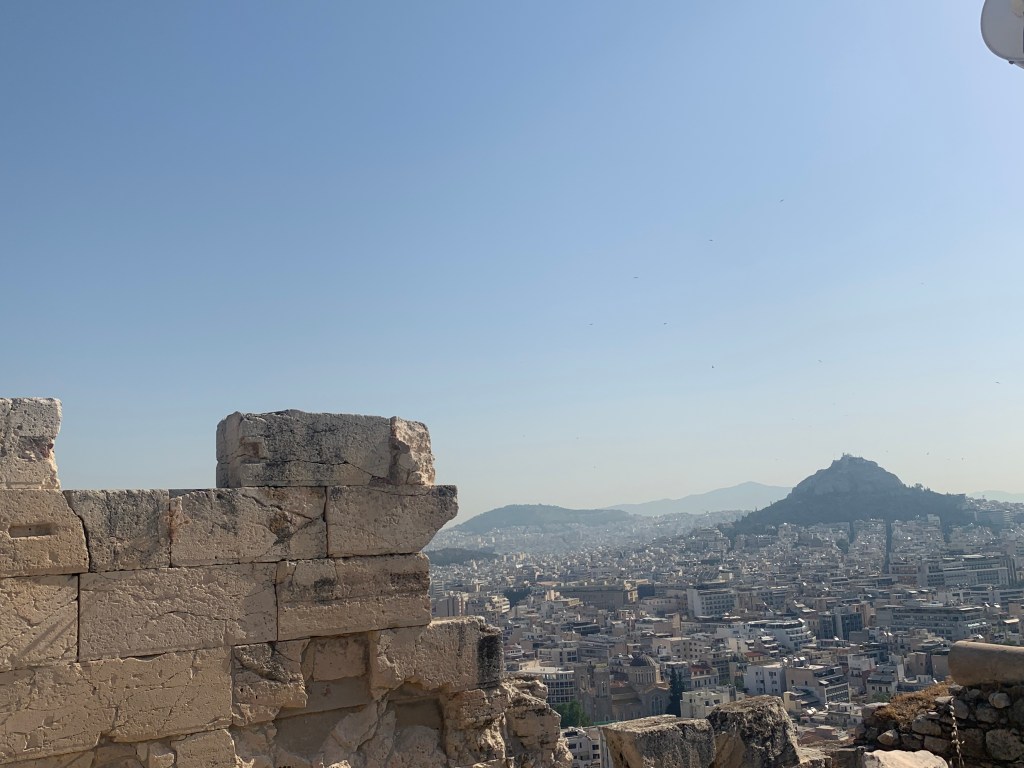
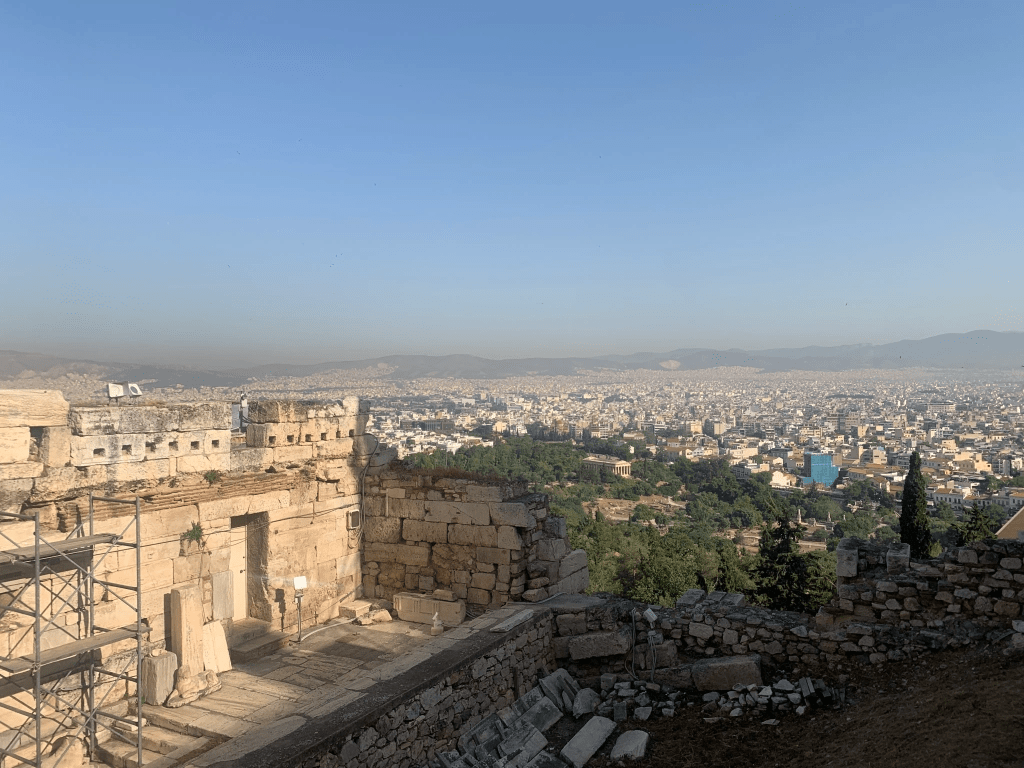
The view of Athens from the Acropolis is truly spectacular and shouldn’t be missed. From the rear of the Acropolis, you’ll be treated to a panoramic vista of the city below that is simply awe-inspiring. Make sure to capture this unforgettable sight with a few photos—it’s a moment you’ll definitely want to remember. Check out my snapshots below to see the stunning scenery for yourself.


The Beulé Gate: A Historical Gateway to the Acropolis
The Beulé Gate, leading into the Propylaia of the Acropolis of Athens, stands as a significant relic from the Roman era. Constructed using materials largely repurposed from the Choragic Monument of Nikias, this fortified gate offers a glimpse into the historical transformations of the Acropolis. The original monument, dedicated to Nikias and built in the fourth century BCE, was dismantled between the second and fourth centuries CE. Despite this, you can still see the inscription from Nikias’ monument in the entablature of the Beulé Gate.
This gate was part of the Post-Herulian Wall, a late Roman fortification built after the Heruli, a Germanic tribe, sacked Athens in 267 CE. The wall reinforced the Acropolis as a military stronghold, marking a shift from its original religious purpose to a defensive position. During the mediaeval period, the gate was further fortified and closed off, and in Ottoman times, it was built over with a bastion.
The Beulé Gate was uncovered by French archaeologist Charles Ernest Beulé between 1852 and 1853. While its discovery was celebrated in France, it faced criticism from Greek commentators and archaeologists due to the aggressive excavation methods used. Today, the gate primarily serves as an exit point for visitors exploring the Acropolis.

The Acropolis remains a stunning example of ancient Greek architecture and a testament to the enduring legacy of ancient Greece. If you’re planning a trip to Athens, a visit to the Acropolis is an absolute must-see, and a chance to immerse yourself in the rich history and culture of this ancient civilisation.
Thank you for reading! If you’re planning a visit to the Acropolis and want more detailed information on how to navigate this historic site, be sure to check out my comprehensive Acropolis Travel Guide. This guide includes practical tips, must-see landmarks, and essential travel advice to make your visit unforgettable.
For further insights into the rich history and architectural significance of the Acropolis, you might find these resources useful:
- Explore the Erechtheion and its historical context on the Acropolis Museum’s website.
- Learn about the intriguing myth surrounding the Turkish harem on the Acropolis in this The Conversation article.
- Discover the architectural brilliance of the Temple of Athena Nike on Khan Academy.
- Read about the history and significance of the Parthenon on History.com.
- Delve into academic perspectives with this JSTOR article.
- Plan your trip with this Culture Map of the Acropolis .
Feel free to leave comments or questions below. Your feedback is valuable, and I’m here to help with any additional information you might need about the Acropolis or other fascinating destinations. Happy travels!


 Nikkidiscovers
