
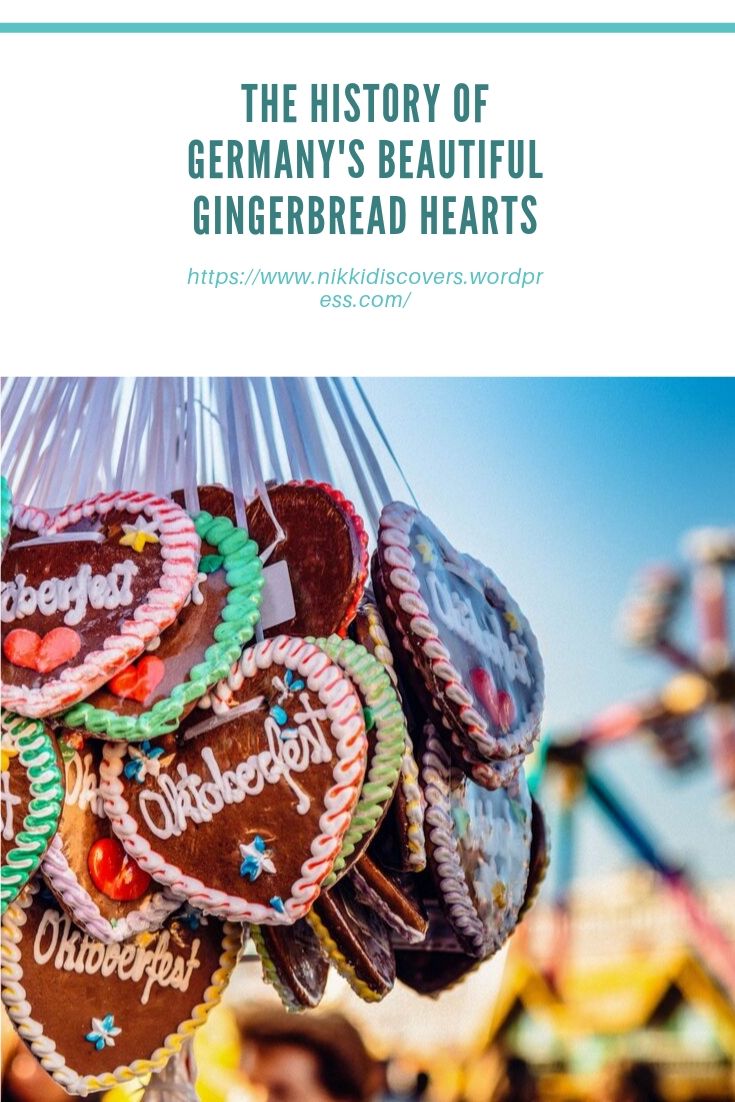
Oktoberfest 2019 has kicked off in Münich, Germany. This means it’s time to wear lederhosen guys, dirndls ladies, and to drink lots of beer. Then there’s the wildly popular Lebkuchenhertz, which are sold at Oktoberfest, Christmas markets, and at some bakeries around Germany. Lebkuchenhertz are gingerbread heart cookies; in South Africa, we call them biscuits. These hearts are brightly decorated with icing and often contain messages or words such as I love you or “Ich liebe e dich.” This makes it a hit with couples visiting Oktoberfest. You will also find ones with mother, father, Oktoberfest, my angel, my princess, etc. written in them.
The word lebuchenhertz is comprised of two words. Kuchen is the word for cake in German, and Hertz is heart, but the Leb part of the word is often debated. Some historians say it stands for “libum,” which is flatbread in Latin. “Laib” is the Latin word for loaf, and some writers claim this is where the “leb” came from. Others claim it’s derived from the word leb-honing, which is a type of crystallised honey that happens to be only used in baking.
The modern-day version of the Lebuchenhertz can be traced back all the way to the 13th century. It was first baked by monks living in Franconia, Germany. However, the recipe for these cookies is ancient. A similar cookie was made by the Egyptians with honey and various spices. The cookies were then buried in the graves of the Pharaohs as offerings to the gods. The Romans then adopted the recipe, calling these honey cookies sweet bread. Given that the spice trade with the Middle East and Orient increased, so did the production of the cookies.
Today, Nuremberg, which is a town located in Franconia, Germany, is the top exporter of lebkuchen. There is a common myth claiming Friedrich III gave out 4000 Lebkuchen to children, which had his portrait printed on them. Today, the Elisenlebkuchen, possibly named after the daughter of the town’s gingerbread maker, has been copyrighted. Only the town of Nuremberg is allowed to make these lebkuchen.
The Lebkuchenherzen, or Lebkuchenhertz, as they are known, became popular during the 1980s. The lebkuchen are now usually made in a heart shape. They consist of various spices and sweet ingredients, and you will find different variations of this cookie. Some ingredients include ginger, cloves, anise, nuts, and honey. The Lebkuchenherzen tend to be harder than normal Lebkuchen. It can be eaten obviously, but I know many tourists bought them as souvenirs wrapped up in cling wrap to be hung on walls. Some Lebkuchenhertz are as big as large dinner plates; others are small enough to be worn around your neck. They are typically attached to ribbons, making them easy to hang up or carry.
And well, that’s a wrap on this interesting, colourful heart-shaped cookie. Thank you for reading. If you have ever been to Oktoberfest, please tell me about your experiences. I appreciate any feedback, and I’m open to answering your questions.
Happy travels!


 Nikkidiscovers