
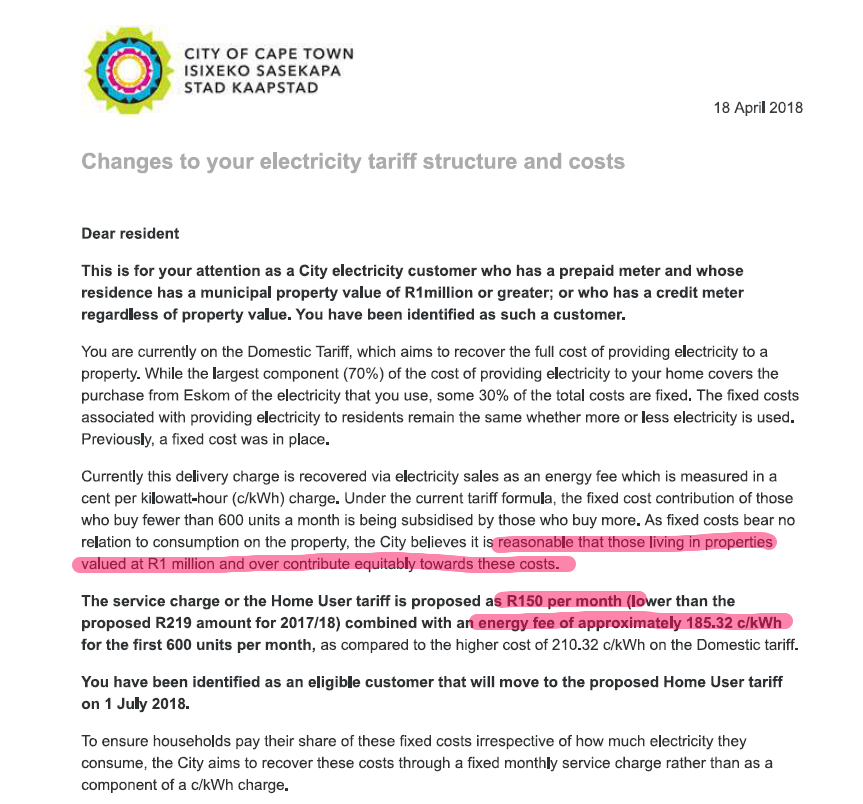
South Africa is currently grappling with an energy crisis primarily due to the mismanagement of Eskom, the national electricity supplier. This has led to widespread load shedding, where power is temporarily cut in certain areas to alleviate strain on the grid. While load shedding has decreased somewhat over the past two years, it remains a significant issue, compounded by rapidly rising electricity costs.
In my community, long-established bakeries are shutting down because they can no longer afford to keep their ovens running. My mother, who relies on a state-funded pension while caring for my disabled brother, is also feeling the pinch of escalating electricity bills.

Koeberg Nuclear Power Station the only nuclear power plant in Cape Town. It was attacked in 1982 during it’s building phase by anti-apartheid activists, Image Source: Pipodesign Philipp P Egli [CC BY 3.0 (https://creativecommons.org/licenses/by/3.0)
Embracing Sustainable Energy Solutions
Environmental-friendly energy production is the future. Countries like Germany are increasingly shifting towards renewable energy sources. Public pressure on leaders, such as Angela Merkel, has resulted in significant changes in how Germany generates energy. Nuclear energy is no longer the only viable option and is increasingly viewed as unsustainable. It’s time to leverage existing technology to develop sustainable solutions to our energy challenges.
The Risks of Nuclear Meltdown
The most pressing concern with nuclear energy is safety. Human error in building and maintaining nuclear reactors can have catastrophic consequences. Notable incidents, such as the 1986 Chernobyl disaster, highlight the potential dangers. The first major meltdown occurred in Harrisburg, Pennsylvania, in 1979. Additionally, the Paks Nuclear Power Plant incident in Hungary involved overheating that damaged 30 highly radioactive fuel assemblies. More recently, the 2011 Fukushima Daiichi disaster in Japan, triggered by an earthquake and tsunami, underscored the inherent risks of nuclear power.
The Dilemma of Nuclear Waste
Nuclear waste poses a lasting environmental threat. It remains radioactive for thousands of years, and currently, no facility exists worldwide that can securely store this waste. The by-products of nuclear energy are not only hazardous but also harmful to our environment, making it a less desirable option for sustainable energy production.
A terrorist attack directed at a nuclear power plant would have devastating effects. The 9/11 attacks have made it clear that terrorists are willing to kill themselves along with many innocent people in a public manner. Rozenkrantz states that“ Confessions by two imprisoned al-Qaida leaders indicate that nuclear power plants were identified among the targets considered” (Rozenkrantz,2006,p.20). This information scares me and I have no idea why policymakers are not considering this threat. Marketing a nuclear power plant as safe is wholly untrue as shown by this quote alone. Given all these concerns maybe alternatives are in order.
The High Cost of Nuclear Energy
Nuclear energy is not a budget-friendly solution. Safety regulations significantly inflate costs, with the proposed reactor in South Africa estimated to cost R1.2 trillion. Given the country’s numerous developmental challenges, this expense raises critical questions about its justification. These funds could be redirected towards essential projects, such as education. For instance, R60 million could modernize a school facility, allowing for the construction of 15,000 progressive schools with the proposed nuclear budget. South Africa desperately needs better education infrastructure.
Secrecy Surrounding Nuclear Energy Deals
Transparency is lacking in South Africa’s nuclear energy negotiations. While it is known that Russia will assist in constructing the plant, details about the tender process remain confidential. This lack of information is particularly concerning in a country grappling with high levels of corruption, making the secrecy surrounding the nuclear power project especially problematic.
The Controversial Russian Connection
South Africa maintains a complex relationship with Russia, evidenced by its membership in BRICS, which includes Brazil, India, and China. While this organisation aims to promote development, entering a nuclear deal with Russia raises concerns. Russia’s economic slowdown casts doubt on its ability to fulfill its obligations, making South Africa’s reliance on Russian energy and funding questionable.
Nuclear Energy and the Risk of Weapons Proliferation
South Africa is unique as the first country to voluntarily dismantle its nuclear weapons. However, the presence of a nuclear reactor poses a risk of facilitating nuclear weapons development. This issue is sensitive in various global contexts, including Iran, as the infrastructure required for nuclear energy can also be utilized for weapon production.
The Threat of Terrorism
Although South Africa has not experienced many terrorist attacks, the threat remains. Limited government action on monitoring local terror groups increases vulnerability. Incidents such as the case of a Cape Town teenager attempting to join ISIS highlight this risk. Reports indicate that as many as 150 South Africans have joined ISIS, with documents suggesting that South Africa is viewed as a potential target for extremist groups.
Exploring Alternative Energy Solutions in South Africa
South Africa has viable alternatives for producing clean, sustainable, and environmentally friendly energy. With its abundant sunshine, solar energy stands out as a prime option. Additionally, Cape Town’s strong winds make wind energy a promising choice for harnessing renewable resources.
The country’s extensive coastline, bordered by the Atlantic and Indian Oceans, also offers potential for hydropower. While the initial investment in these green technologies may be higher, the long-term cost of renewable energy is significantly lower than that of nuclear energy.
Contrary to the South African government’s claims that nuclear energy is the only solution, there are more sustainable and economically viable pathways forward. Embracing these alternatives can pave the way for a cleaner and more sustainable energy future.
Sources
Anzai,K, Ban,N, Ozawa,T. & Tokonami,S. (2012). Fukushima Daiichi Nuclear Power Plant accident: facts, environmental contamination, possible biological effects, and countermeasures, Journal Clinical Biochem Nutr, 50(1): 2-8
Caboz,J. (2018). Cape Town is changing the way it charges for power because its residents are using too little electricity. Here’s what it will mean for your power bills, from: https://www.businessinsider.co.za/heres-why-cape-towns-radical-change-in-the-way-it-charges-for-electricity-wont-end-up-costing-anyone-anything-extra-you-just-wont-save-either-2018-4
Ebrahim, S. (2015).Cape girl stopped from joining IS, from: https://www.iol.co.za/news/cape-girl-stopped-from-joining-is-1841189
Head, T. (2017).What could R1 trillion buy South Africa instead of a nuclear deal?, from: https://www.thesouthafrican.com/what-can-you-buy-for-r1-trillion-nuclear-deal-price/
Institute for Security Studies. (2015). Are South Africans soft targets for ISIS recruitment?, from: https://issafrica.org/iss-today/are-south-africans-soft-targets-for-isis–recruitment
Rosenkrantz, G. (2006). Nuclear Power: Myths and realities the risks and the prospects In Henrich Böll Stiftung, Nuclear Power: Myth and reality, p.11-48, South Africa, Creda Communications
Wicks, J.(2018). Isis a real threat in South Africa, from: https://www.timeslive.co.za/amp/news/south-africa/2018-02-26-isis-a-real-threat-in-south-africa/
Thank you for reading and please do feel free to comment. I would love to hear if you agree with me or disagree and why. I love reading comments on my blog so do comment if you want to. If you would like to collaborate with me or if you would like me to write a guest post for you do let me know via the comments or e-mail me.
Wishing you all happy travels!


 Nikkidiscovers
Interesting post! I was in Johannesburg a couple years ago when they were experiencing a major draught and there were signs in the restrooms asking people to conserve water.. When it comes to nuclear energy, the technology has come a long way and personally I don’t think it should be ruled out entirely. Solar energy is much more expensive, especially for developing nations that are rapidly growing and need power.
LikeLike
I understand your point however in the long run nuclear energy is actually much more expensive. The cost of green energy is becoming cheaper every year whilst nuclear energy costs are increasing. But in some cases it is necessary to maintain nuclear energy sources. Replacing exsiting plants with green alternatives would certainly be too expensive. In the case of South Africa though expanding our nuclear energy production is complicated as corruption runs rampant. Due process wasn’t followed and as I have mentioned the Russian connection is dubious. But I do agree that in certain cases it is needed. I just personally feel that it’s a bad option for my country at the moment.
LikeLiked by 1 person