
Aachen, located in the western part of Germany, is a historic spa town renowned for its rich medieval heritage. This charming city has a history that spans millennia, originally settled by the Celts and later by the Romans who flocked to its natural thermal springs. Notably, Emperor Charlemagne chose Aachen as a strategic political center and indulged in its healing waters. He commissioned the stunning Aachener Dom, which became Germany’s first UNESCO World Heritage Site when it was added to the list in 1978.
From 936 to 1536, Aachen served as the coronation site for 31 Holy Roman Emperors, solidifying its importance in German history. Its unique location near the borders of the Netherlands and Belgium adds to its appeal, making it a fascinating crossroads of culture and history.
Despite its significance, Aachen is often overlooked in popular travel guides, which tend to favor cities like Cologne, Düsseldorf, and Bonn. For instance, the “Tour the Ruhr” guidebook, gifted to me by my department head during my studies in Germany, does not include Aachen. However, I still recommend this engaging book by Roy Kift, who lived in the region for over 20 years and writes with captivating insight.
A Day Trip to Aachen: My Experience
My friend Anastasia and I decided to explore Aachen for a day, as it’s only about two hours away from Essen by train. Although I knew Aachen was famous for its natural springs, I didn’t conduct much research beforehand. I simply checked the weather and packed a small backpack.
The train ride was pleasant, albeit a bit lengthy. Upon arrival, I was immediately struck by the train station, which was much smaller than Essen’s. As we exited, we admired the traditional façade of the station—Anastasia loves old train stations, so we snapped a few photos. I also took pictures of a statue depicting a herd of horses. This statue holds special significance for me, as my older brother, who is disabled and non-verbal, has a deep love for horses.
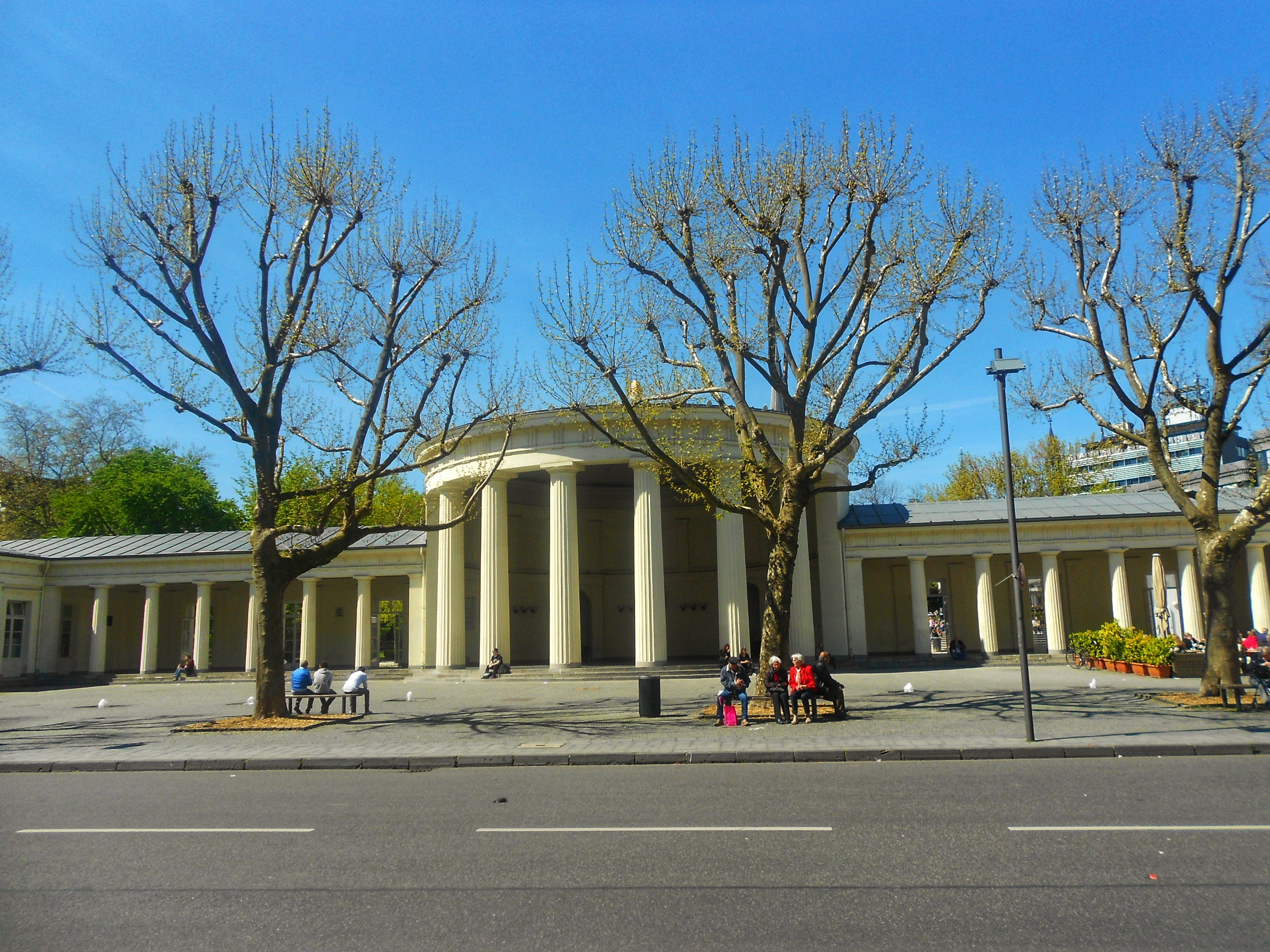
After capturing these moments, we ventured toward the city centre. Our walk was short, and soon we reached what appeared to be the main street. Across the road, we spotted a Roman-style structure adorned with white columns. Curious, we noticed a line of people eager to touch the water flowing from a mini fountain. A sign clearly stated that the water was not for drinking, yet some visitors still partook.
This impressive structure is the Elisenbrunnen, built in 1827, featuring two sulphurous fountains. Both Anastasia and I couldn’t resist touching the water, intrigued by its unique properties.
Exploring Aachen: Tourist Information and Historic Sites
After arriving in Aachen, we utilised Google Maps to locate the Tourist Information Centre. Here, we collected maps of the city and I purchased a postcard as a keepsake. The staff highly recommended visiting the Aachener Dom, the main attraction in Aachen, known for its stunning architecture and historical significance.
As we made our way to the church, we stumbled upon the historic Aachen settlement site nestled within one of Aachen’s beautiful parks. This remarkable site is housed in a modern structure, allowing visitors to explore various archaeological finds. As a South African, I was pleasantly surprised to see such a valuable exhibit accessible to the public for free. In my home country, such treasures might be at risk of vandalism or theft.
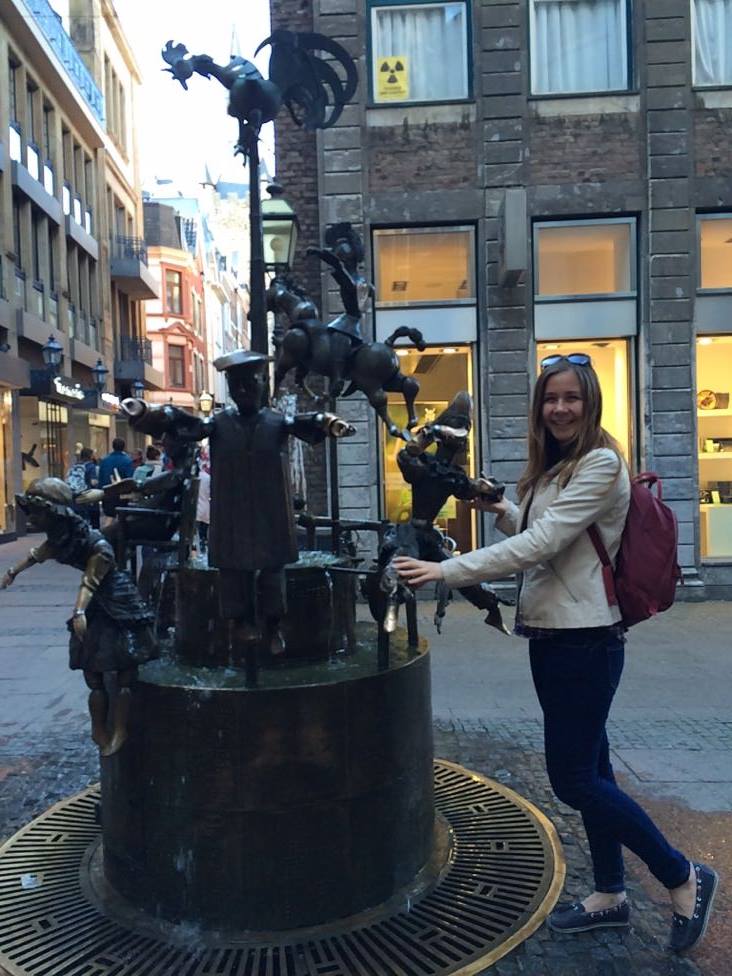
Continuing our walk, we discovered a variety of unusual sculptures scattered throughout the city. Some of these pieces were interactive, inviting visitors to engage with the art. I found this aspect particularly enjoyable, as it added a playful element to our exploration of Aachen.

Visiting Aachener Dom: A UNESCO World Heritage Site
After exploring Aachen, we finally arrived at the Aachener Dom, a stunning medieval church recognized as a UNESCO World Heritage site. While it is relatively small, its beauty is truly captivating. Inside, the intricate gold mouldings are striking, and unlike many ornate churches, this one strikes a perfect balance between elegance and simplicity.
Entry to the Aachener Dom is free, and during our visit, there were surprisingly few tourists, allowing us to fully appreciate the serene atmosphere. Unfortunately, flash photography wasn’t permitted, and my camera struggled in the low light, but my friend Anastasia kindly took some photos and shared them with me.
At the time of our visit, the church was undergoing renovations, which slightly detracted from its exterior beauty, but it was still an awe-inspiring sight. One observation I found intriguing was the strong support for local tourism among Germans; many visitors inside the Dom were German locals.
Reflecting on my own travel experiences, I recognise that I haven’t explored much of South Africa due to financial constraints. However, I aspire to travel more within my country and across Africa in the future. While South Africans often flock to larger cities and popular tourist spots, smaller gems like Arniston are frequently overlooked. I truly wish my country embraced a culture of exploring lesser-known destinations, much like the Germans do.

Exploring Aachen’s Rathaus and Public Garden
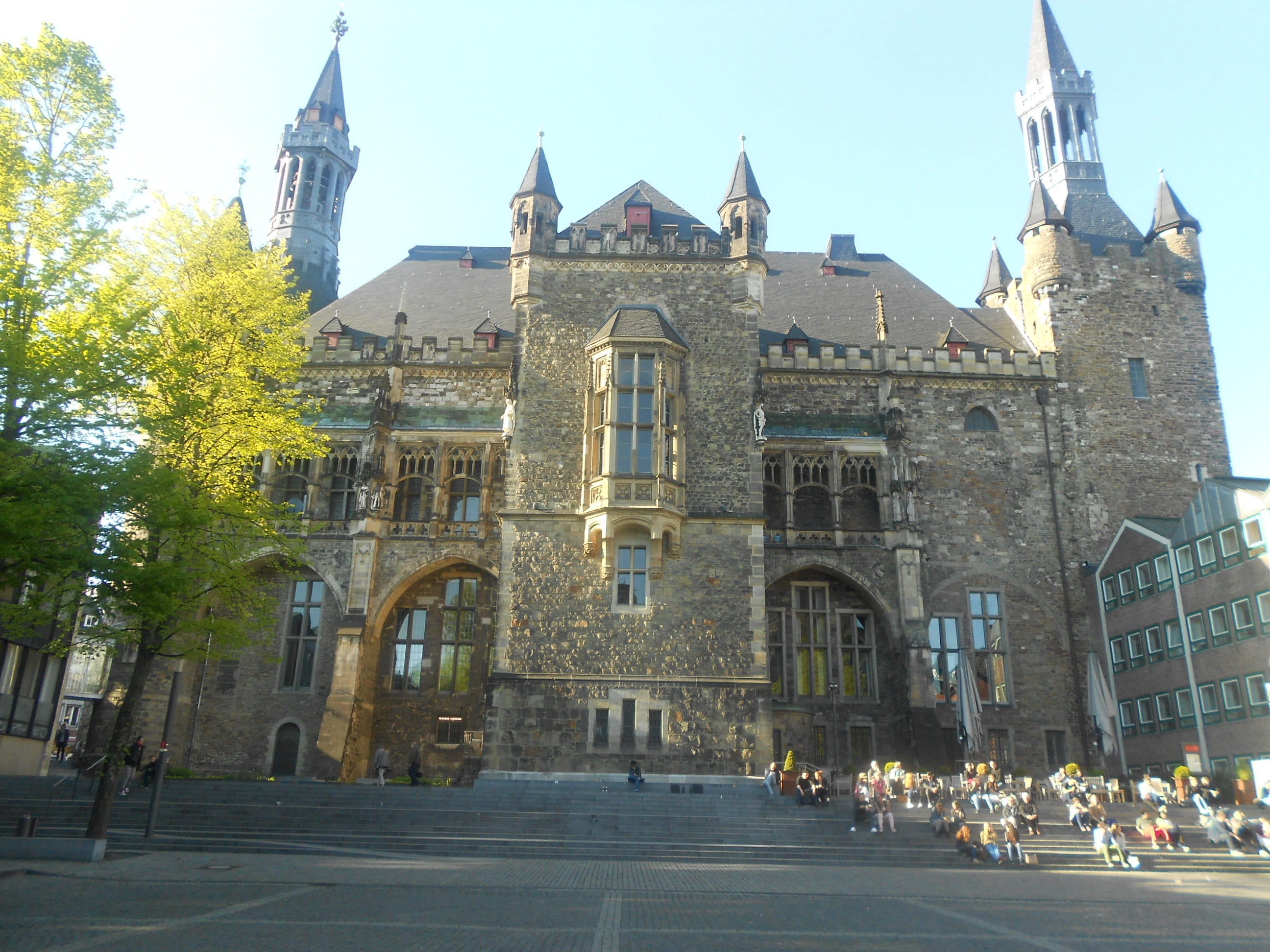
Next, we visited the Rathaus (City Hall), renowned for its grand Gothic architecture. After admiring the impressive structure, we strolled past several charming shops before entering a larger public garden. To our delight, the garden featured beautiful cherry blossom trees in full bloom, creating a picturesque scene.
It was a lovely day, and the park was bustling with activity. Many visitors were grilling and enjoying picnics, while others relaxed under the sun. The garden also includes a serene cemetery section, adorned with stunning headstones and sculptures, adding a touch of history and tranquility to the vibrant atmosphere.

Visiting the Synagogue in Aachen
Anastasia was eager to visit the synagogue in Aachen, especially considering the limited number of synagogues in Germany. According to Deutsche Welle, only 130 prayer rooms and synagogues remain in the country today. Upon arrival, both of us were somewhat disappointed; the building’s modern design differed significantly from our preconceived notions. However, it showcased its own unique beauty.
Nearby, we found a memorial that evoked sadness as we reflected on the impact of World War II on the community. We also noticed a police presence stationed outside the synagogue, which struck us as unusual. In Essen, we had observed a similar security detail, and I noticed this trend across other European countries as well. This level of security is uncommon in South Africa, where synagogues typically operate without such protection.
As political studies scholars, we discussed the troubling reality that police presence is necessary to safeguard these sacred sites from vandalism. Our conversation touched on the rise of neo-Nazism and how synagogues in Russia are similarly guarded. Despite these challenges, we both admired the Jewish community in Aachen for their resilience and commitment to honouring their heritage through the memorial.

Exploring Aachen: Dining and Attractions
After taking a few photos, we passed through Aquis Plaza, a charming mini-mall, and St. Adalbert Church. By this time, both of us were quite hungry, so we made our way back to the central part of Aachen in search of a place to eat. We found a lovely restaurant with a view of Aachener Dom. The food was excellent and surprisingly affordable—just €11 for soup with bread, a salad, and a shared plate. I love to eat, but I wasn’t overly hungry, and this meal was part of a special offer. We also enjoyed tea, which cost around €2. Overall, I spent very little on this trip since most activities involved visiting free sites and leisurely walks.
Aachen is small enough that everything is within walking distance, providing a calmer atmosphere compared to the bustling cities of Cologne and Düsseldorf. The lack of tourist crowds made it easier to photograph the beautiful sites. I felt less rushed in Aachen, allowing us to see everything we wanted in a day without the stress of long queues or expensive taxis. If you find yourself nearby, I highly recommend visiting this charming town.
Travel Information
If you’re departing from Essen’s main train station (Essen Hauptbahnhof), the average travel time to Aachen is about 2 hours and 1 minute on the Deutsche Bahn train. Tallys also operates trains from London to Aachen. I travelled for free using my student card, which allowed me to ride in the region. For train ticket prices, click the link here.
Getting There
Where to Stay
I didn’t stay overnight, but if you plan to, check out this link for more information: Best Hotels in Aachen.
Aachen Tourist Information Office
Friedrich-Wilhelm-Platz
52062 Aachen
Telephone: +49 241 18029-60
Fax: +49 241 18029-69
Email: info@aachen-tourist.de
Website: www.aachen-tourist.de
Further Reading
For more information on synagogues in Germany, visit Deutsche Welle.
http://www.historicgermany.travel/historic-cities/aachen
Thanks a lot for reading. Please feel free to comment both positive and negative feedback will be appreciated.
Wishing you happy travels


 Nikkidiscovers